
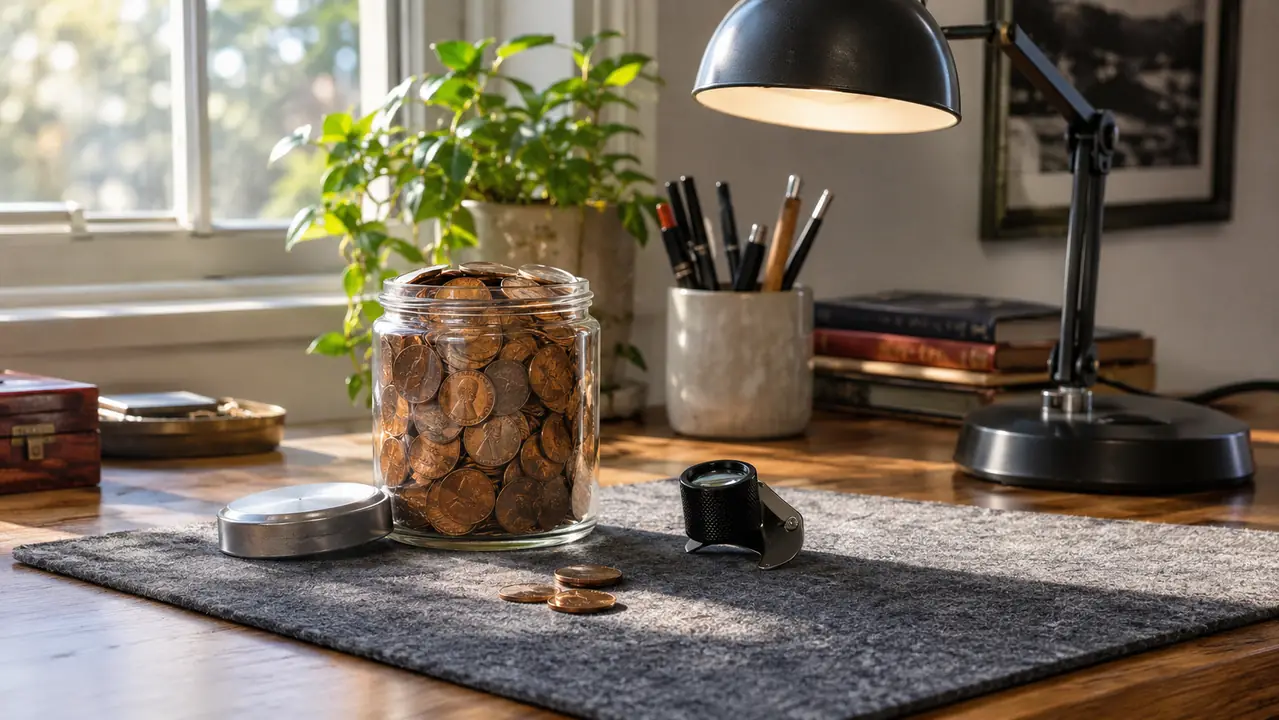
Maddie found the wheat cent in the coffee can my grandfather left me when I was eleven. She is nine now, and on Saturday mornings she sits at the spare-room desk with me, a felt pad between us, sorting cents by date. She held one up and asked why the date was so small. I looked. I could see the word LIBERTY and the wheat stalks, but the last digit was a smudge. My old magnifying glass made it worse, a bright ring and a stretched number. That is when I reached for the JARLINK 30X 60X Illuminated Jewelers Loupe I had bought for exactly this kind of moment.
I am 63, a retired machinist in Dayton, Ohio, and I collect Lincoln wheat cents and a modest run of Morgan dollars. My grandfather's can is where I started, and Maddie is where the hobby goes next. I have learned the hard way that small tools matter. A loupe is not a toy for looking at shiny things. It is the difference between reading a date and guessing at it.
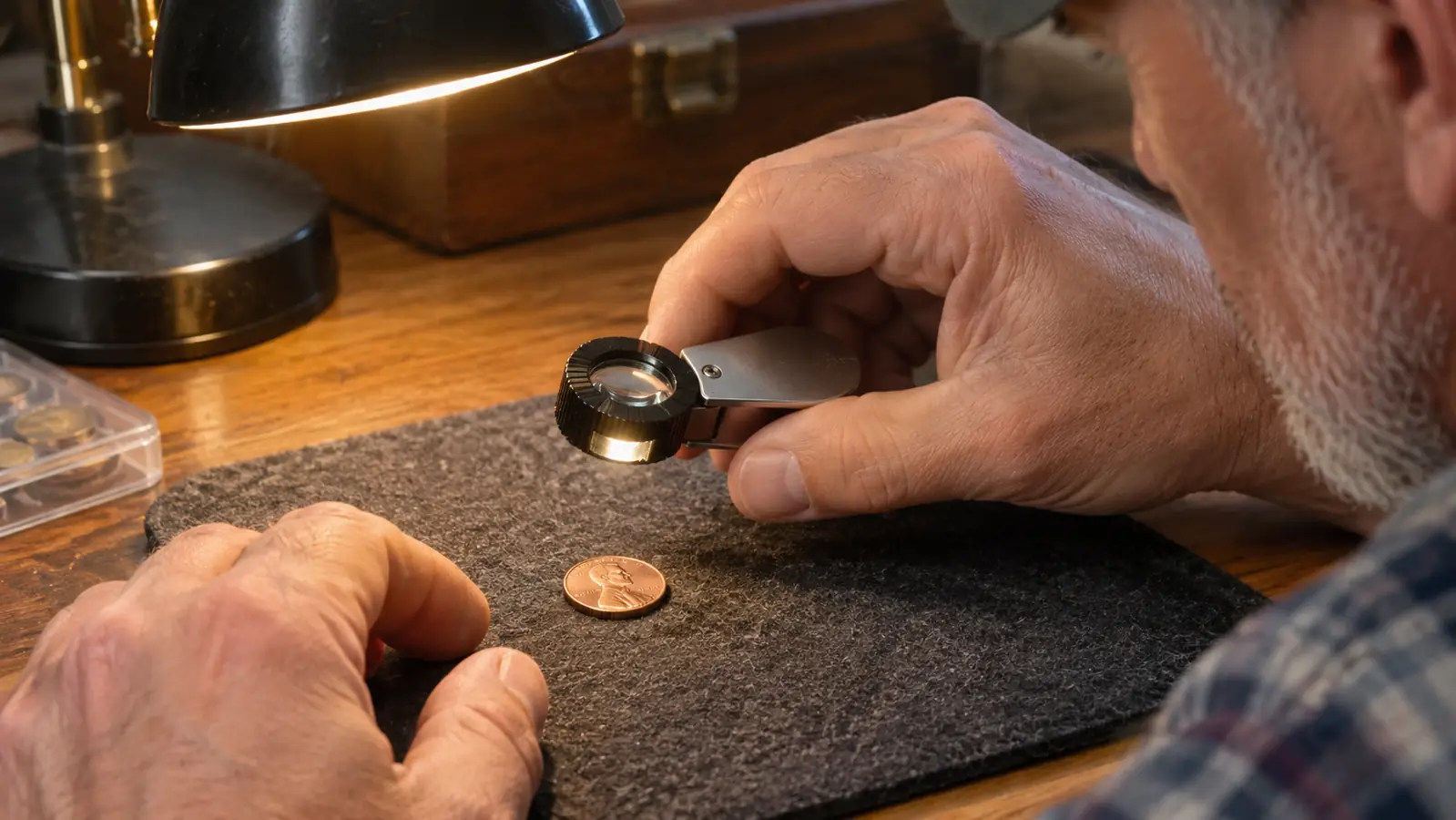
The JARLINK has two lenses. The primary is 30x22mm, and there is a supplementary 60x12mm lens. The body measures 1.6 inches long by 2 inches wide and weighs 27.22 grams, so it sits in the hand without pulling at the wrist. The lens is resin, not glass, and the light is an LED powered by LR1130 button batteries. It comes with a fabric bag and a screw in the package. That is the whole list. No app, no screen, no settings to learn.
The first thing I did was put the cent on the felt pad and bring the 30x lens down close. The LED light hit the surface at an angle and the date came up out of the wear. 1919. The last digit was weak but readable, and the mint mark area was clean enough to tell me it was a Philadelphia coin. Maddie asked how I knew. I showed her the shape of the 9 and the way the metal had worn around the rim. A magnifying glass on a stand would have shown me a bigger blur. The loupe showed me the actual surface.
I have used the 60x lens for the things that need more reach: the edge of a Morgan dollar, a possible repunched date, the fine lines on a wheat stalk. It is a small lens, 12mm, so you need to get close and hold steady. That is the trade. More power, less room for error. The 30x is the one I reach for first. The 60x is the one I use when the 30x says maybe.
At 30x, the 1919 date was not a guess. It was a stamped number with wear I could read, and that is all I ever wanted from a loupe.
The tool that turned a smudge into a date
The JARLINK loupe is the one on my desk, in the fabric bag, next to the felt pad. If you are sorting a coffee can of your own, start with the 30x lens and a steady hand.
Amazon See the JARLINK loupe on Amazon →What I did not expect was how much the light mattered. My desk lamp is fine for a newspaper, but it throws a hot spot on a coin and leaves the edges dark. The LED on the loupe lights the area right under the lens, which is where the date sits. I still use the lamp. I just do not rely on it for the last digit.
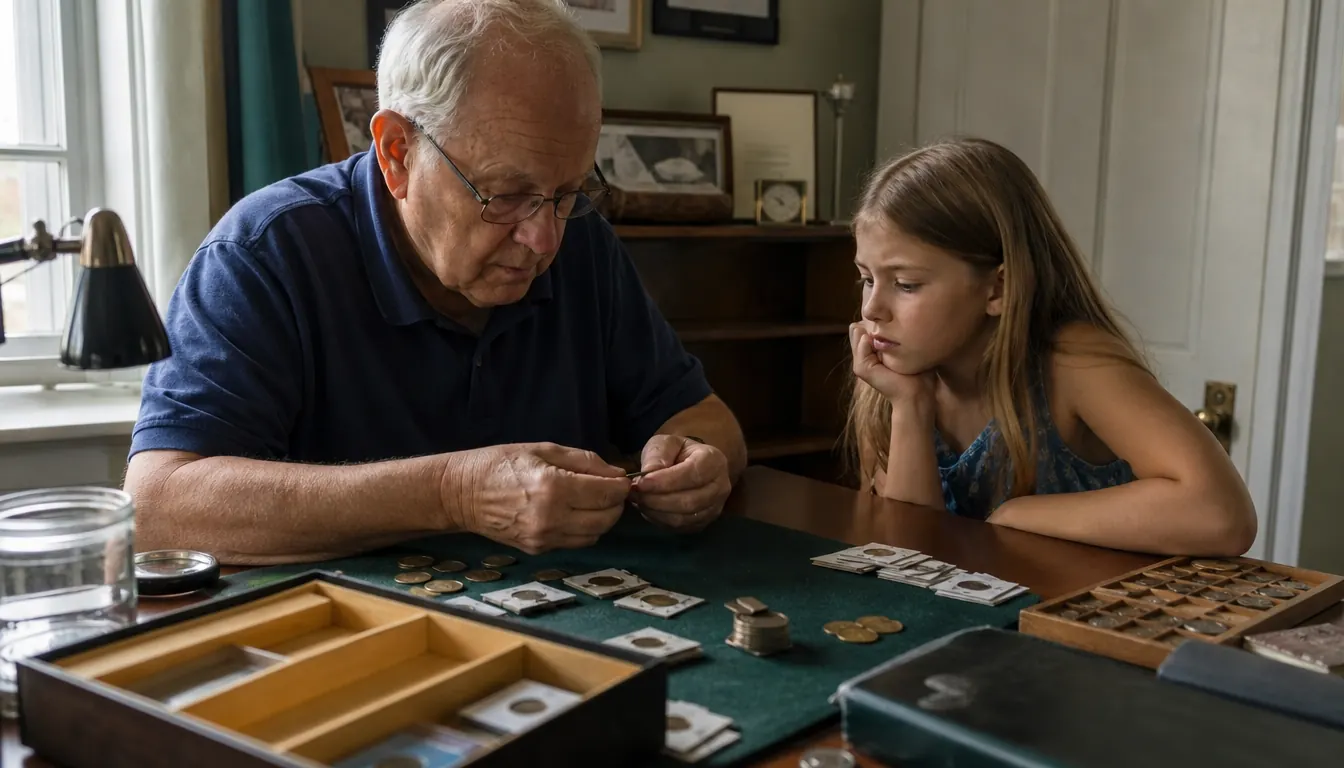
The other thing I noticed is the weight. 27.22 grams does not sound like much, and it is not. But when you are holding a loupe over a coin for ten minutes, a heavy tool makes your hand tired and a light one lets you keep going. Maddie can hold it without complaining. That matters more than any specification on a box.
I have ruined coins. Not many, but enough to know the rules. Fingers leave oil. Oil attracts dust. Dust and humidity do their work in the dark. So the loupe stays in its fabric bag when it is not being used, and I keep the coins on a felt pad, not on the bare desk. Carol tolerates the lamp and the felt pad, which is more than I could ask. The bag is not a display case. It is a habit.
Maddie has her own system now. She looks at the date first, then the mint mark, then the wheat lines. She calls out what she sees and I check it with the 30x. Last Saturday she found a 1931 with a weak strike and asked if that made it special. I told her it made it interesting, which is not the same thing. She thought about that for a minute and went back to the can. That is the hobby working.
What I'd Tell You If We Were Sitting at My Kitchen Table
I would tell you not to buy a loupe because you think it will make you money. I would tell you to buy one because the hobby is better when you can see what you are looking at. A 30x lens and a small light will answer most of the questions a new collector has. The JARLINK is not a laboratory instrument. It is a small, battery-powered tool that fits in a drawer and does the job. If you are teaching a kid, get two, so you are not passing one back and forth. If you are working alone, get one and keep it in the bag.
A small tool for the next Saturday
The JARLINK 30X 60X loupe lives in my desk drawer with the felt pad and the coffee can. It is the first thing I hand Maddie when she sits down. If you have a can of wheat cents and a date you cannot read, this is where I would start.
Amazon See the JARLINK loupe on Amazon →