
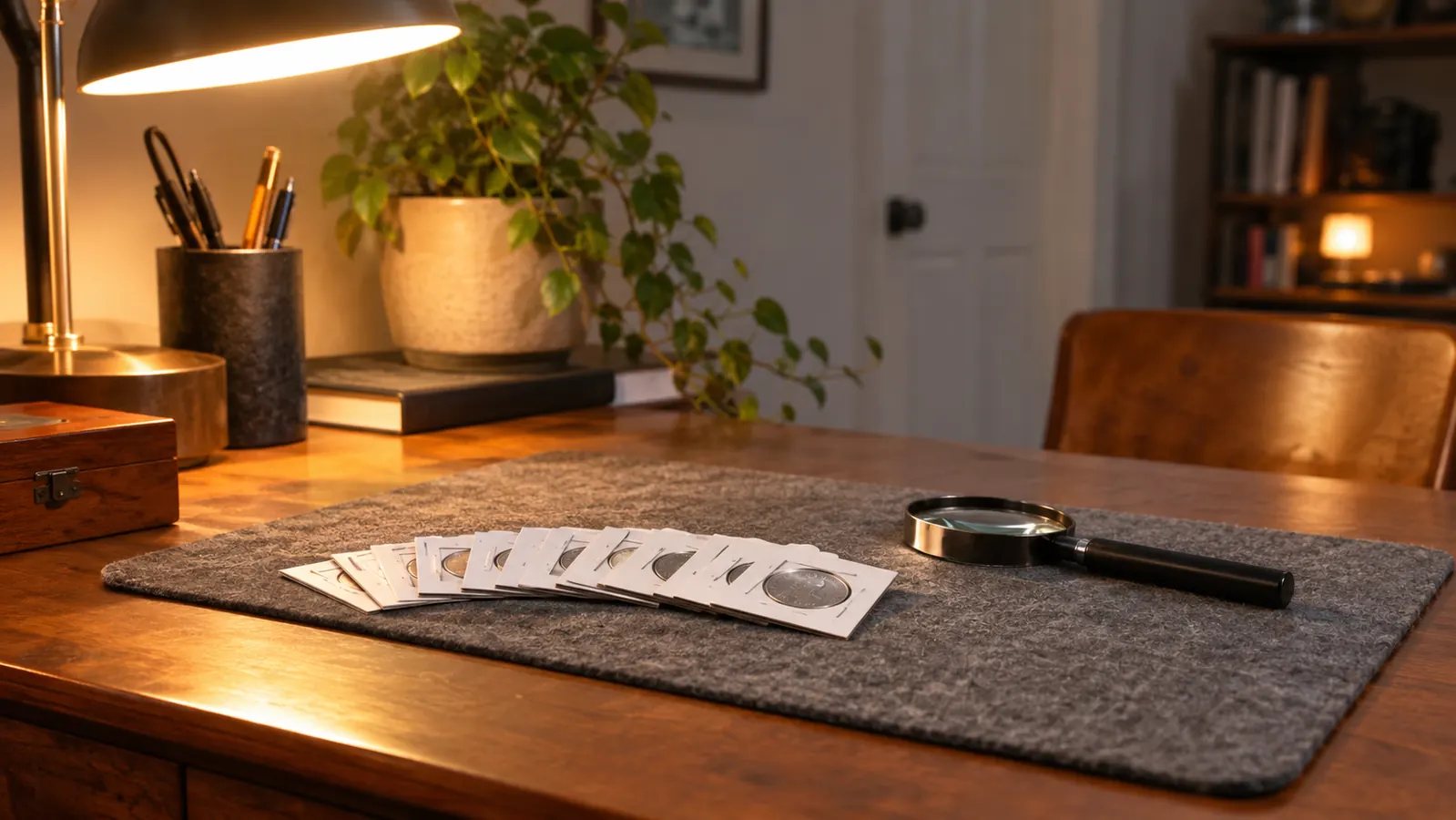
For the first twenty years I collected Lincoln wheat cents, I graded them with a desk lamp and a stubborn streak. If I could not see a flaw from eighteen inches away, I decided it was not there and moved on to the next flip. Then I bought a loupe, sat down with a 1914 Lincoln cent I had owned since the nineties, and found a rim nick I had been staring past for a quarter century.
The one on my bench now is a JARLINK 30X 60X illuminated loupe. It is not a stereo microscope and it does not pretend to be one. It is a small battery-powered tool that sits beside my felt pad in the spare bedroom, and it changed the way I look at a coin before I buy it, before I store it, and before I hand it to my granddaughter Maddie on a Saturday morning. What follows is not a spec sheet. It is ten reasons the thing has earned its spot.
Look at the next coin before you decide about it
The JARLINK loupe carries a 30x22mm primary lens, a 60x12mm supplementary lens, its own LED light, three LR1130 batteries and a fabric bag in the box. Mine lives next to the felt pad and goes to every club meeting.
Amazon Check Today's Price on Amazon →The 30X lens reads a worn date without a squint
The main lens is 30 power with a 22mm opening, wide enough to take in the whole date and the mintmark in one look. That matters more than it sounds. On a worn 1919 Lincoln cent, the shape of the last digit and the position of the mintmark decide what you are holding. At 30 power you can see the metal flow around the numbers, the way the die pushed metal rather than cutting it. Under a desk lamp alone, you are mostly seeing a guess.
The 60X lens finds what hides at 30X
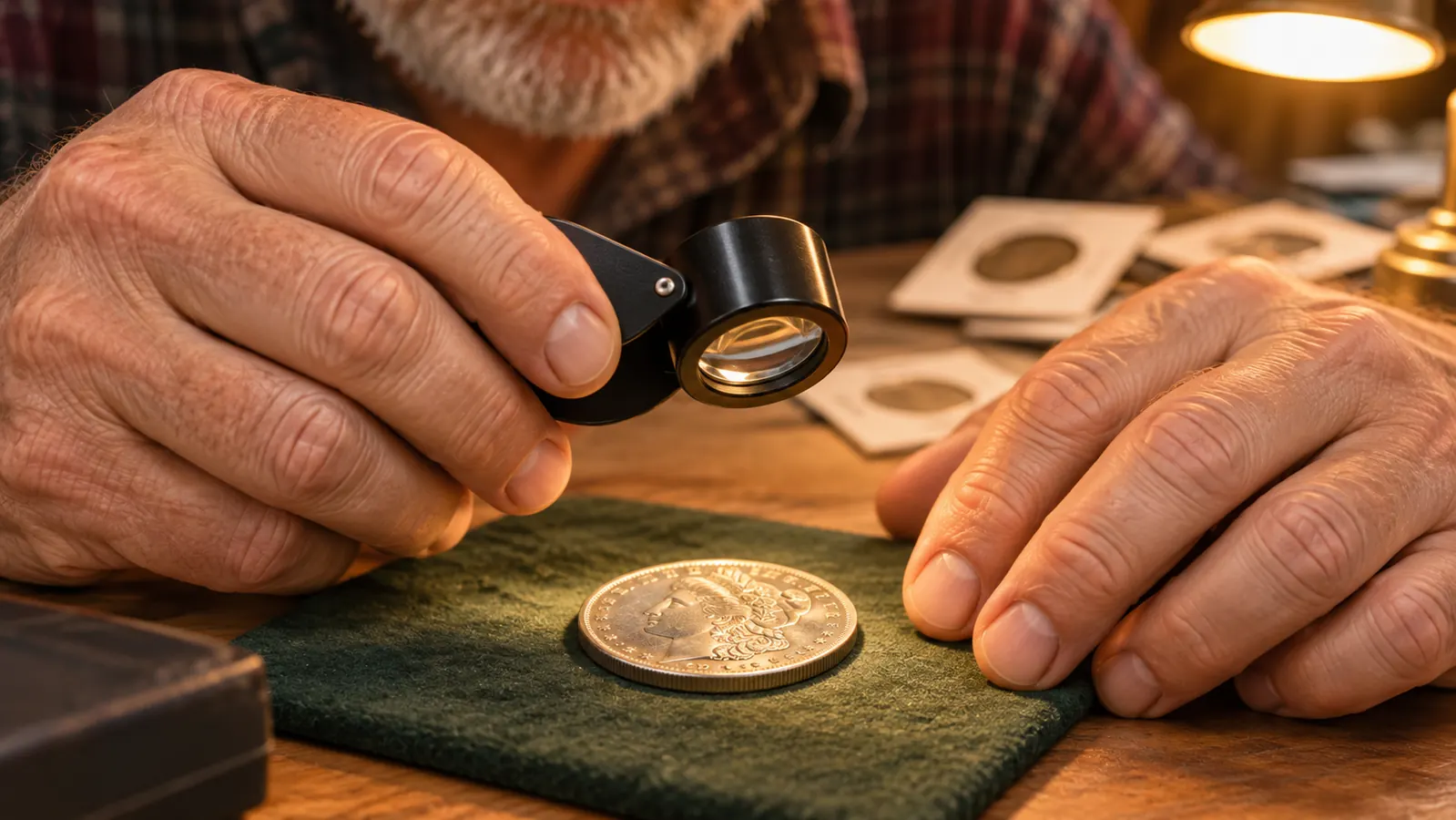
The supplementary lens is 60 power with a 12mm opening, and the field goes tight fast. This is where repunched mintmarks, die cracks and doubled outlines stop being things I hear about at club meetings and start being things I can point at. The opening is small, so you have to center the coin and hold still. That is the point. A narrow view forces you to examine one square millimeter at a time instead of waving the tool over the whole face and calling it done.
The LED light shows what a desk lamp flattens
The loupe carries its own LED light and throws it at a low angle across the surface. The angle is the whole trick. Light coming straight down makes a cleaned coin look perfectly fine. Raking light shows the hairlines, the wipe marks, the faint swirl where somebody took a cloth to a cent decades ago. I have walked away from two coins in the past year because of what that light showed me at the edge of the field, and I do not regret either walk.
At 27.22 grams it goes where the coins are
The whole tool weighs 27.22 grams, about like a couple of quarters in the pocket. It rides along to the monthly club meeting and to the one shop in town that still keeps a wheat cent box on the counter. Nothing to plug in, nothing to assemble, no case to open first. I take it out, look at what I came to look at, and put it back. That is the entire routine, and the routine is the reason it actually comes with me.
Battery power keeps the bench clear
It runs on button batteries, and the package includes three LR1130 cells. No cord dragging across the felt pad. No cord catching the lip of a coin flip and launching a Morgan dollar onto the hardwood, which is a thing that happened in my house exactly once and will not happen again. A small battery tool is not glamorous. A clear bench is a bench where you are less likely to break something you have been careful with for thirty years.

Two lenses on one tool means no fumbling
Dual lens loupes are nothing new, but this arrangement is why I stopped carrying two separate magnifiers in my jacket. The 30X does the general survey and the 60X does the interrogation, and I am not setting one tool down and picking another up with the same hand that is holding a coin over a hard surface. Fewer moves over the felt pad means fewer accidents. It also means I actually check the mintmark instead of deciding it can wait until I get home.
It gives a nine-year-old something real to do
Maddie is nine and she has the patience of a nine-year-old, which is not a lot. A loupe gives her a job. She reads the date, then checks the mintmark, then we switch to the 60X and she goes quiet for a minute. That quiet minute is worth more to me than the tool itself. I would rather she learn to look closely at one thing than learn to flip through a whole box fast and see nothing in it.
The resin lens and the bag tell you what this is
The lens is resin, not glass, and the package includes a fabric bag. That is an honest description of what this is: a good pocket tool, not an heirloom optic. Keep it in the bag when it is off the bench, because a resin lens loose in a drawer with a screwdriver will pick up scratches. Mine has lived in the bag since the day it arrived and the view is still clean. There is also a spare screw and a manual in the box, neither of which I have needed.
It takes up 1.6 by 2 inches of bench
The JARLINK loupe measures 1.6 inches by 2 inches. On a desk that already holds a lamp, a felt pad, a red book and a row of cardboard flips, that matters more than you would think. Mine goes into the top drawer of the fireproof box in the closet when I am finished for the night, and it does not crowd the pad while I am working. A tool that fits the bench gets used. A tool that needs its own table does not.
It slows you down at the exact moment that matters
Most of the coin mistakes I have made happened fast. Something looked good, I paid, I got it home, and the loupe found the edge ding I should have seen in the shop. The tool does not make a coin better and it does not make one more valuable. What it does is put two seconds of pause between your eye and your wallet. In my experience, two seconds is very often the whole difference.
At 60 power I found a repunched mintmark on a cent I had owned for eleven years and never once seen.
What I'd Skip
Here is what I would not spend on. A phone camera zoom, because digital zoom invents detail that was never on the coin and then you believe it. A folding 10X magnifier is fine for a quick glance across a show table, but it will not read a worn date and it will not show you a repunched mintmark. I would also skip using the 60X to form a general opinion about a coin's surface. At that power every bag mark looks like a canyon and you will talk yourself out of a perfectly good circulated Morgan dollar. Use the high power to answer one specific question, then go back to the 30X. And I would skip any claim that a pocket loupe replaces a stereo microscope. It does not, and anybody telling you otherwise is selling something.
One small tool, one honest look at the coin in your hand
30X and 60X lenses, an LED light, three LR1130 batteries and a fabric bag. It fits in the drawer with the felt pad and goes to the club meeting in a shirt pocket.
Amazon Check Today's Price on Amazon →