
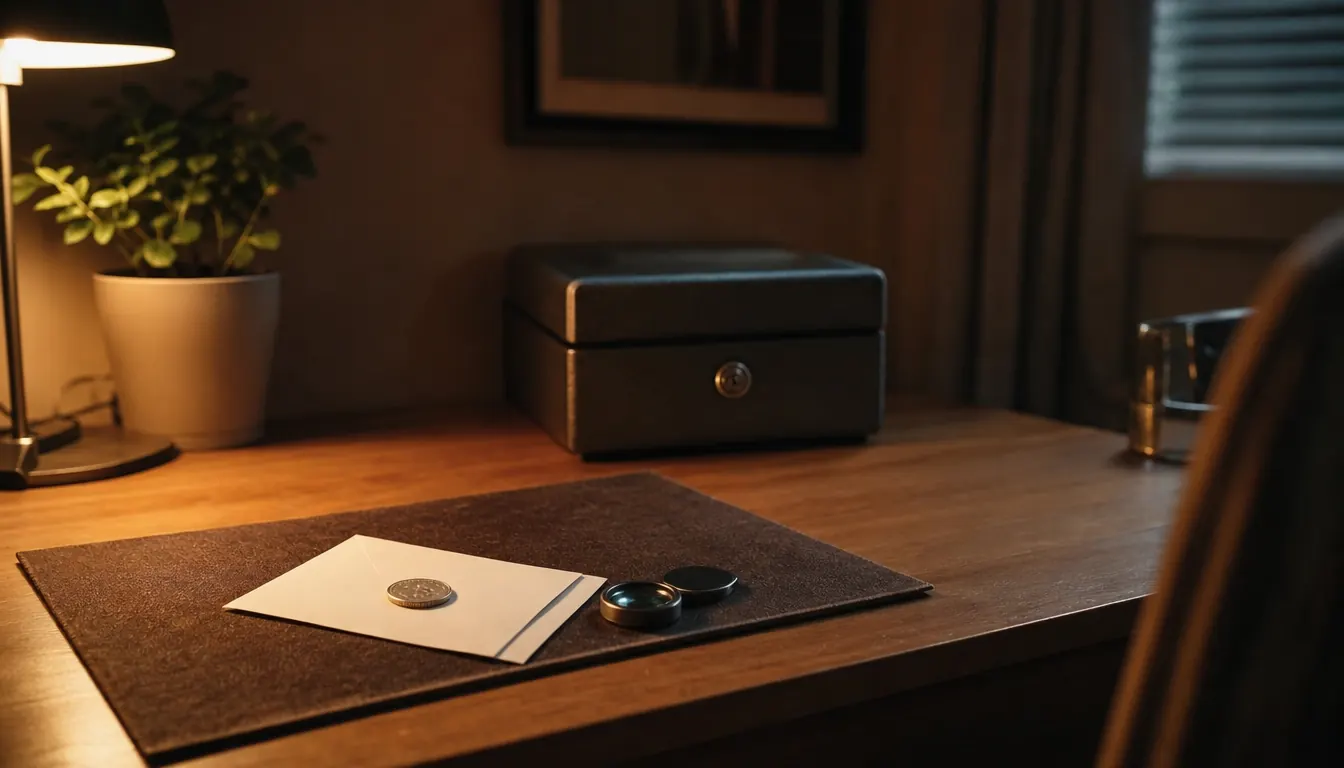
Most reviews of a loupe tell you what the box says. Thirty power, sixty power, a light, a bag. That is the easy part. What none of them tell you is that a loupe is a hand tool before it is an optical instrument, and the first week with one is mostly a lesson in holding still. I am 63, I retired from a machine shop in Dayton, and I have spent the last few years working through a coffee can of wheat cents my grandfather left me when I was 11. I bought the JARLINK 30X 60X illuminated loupe for the desk in my spare bedroom. Here is the honest version, including the parts I do not love.
The short version: the 30X lens and the light are worth the trouble, the 60X lens is a specialist you will rarely use, and the fiddly bits are real. Button cells, a small screw, a lens that needs to be kept clean and dry. None of that is a dealbreaker for a hobbyist who works at a desk. All of it matters if you expect to pull this out of a pocket in a coin shop and get a clean look in three seconds.
The Quick Verdict
Buy it for the 30X lens and the LED, treat the 60X as a specialist, and plan on learning the hand technique. The resin lens and the button cells are the honest tradeoffs.
Amazon Check Today's Price →The 30X lens and the light are the reason this lives on my desk
Dual lens loupe with a 30X primary and a 60X supplementary lens, LED illumination, three LR1130 cells, a fabric bag and a spare screw in the box. 27 grams, 1.6 by 2 inches.
Amazon Check Today's Price on Amazon →How I've Used It, and What Maddie Taught Me
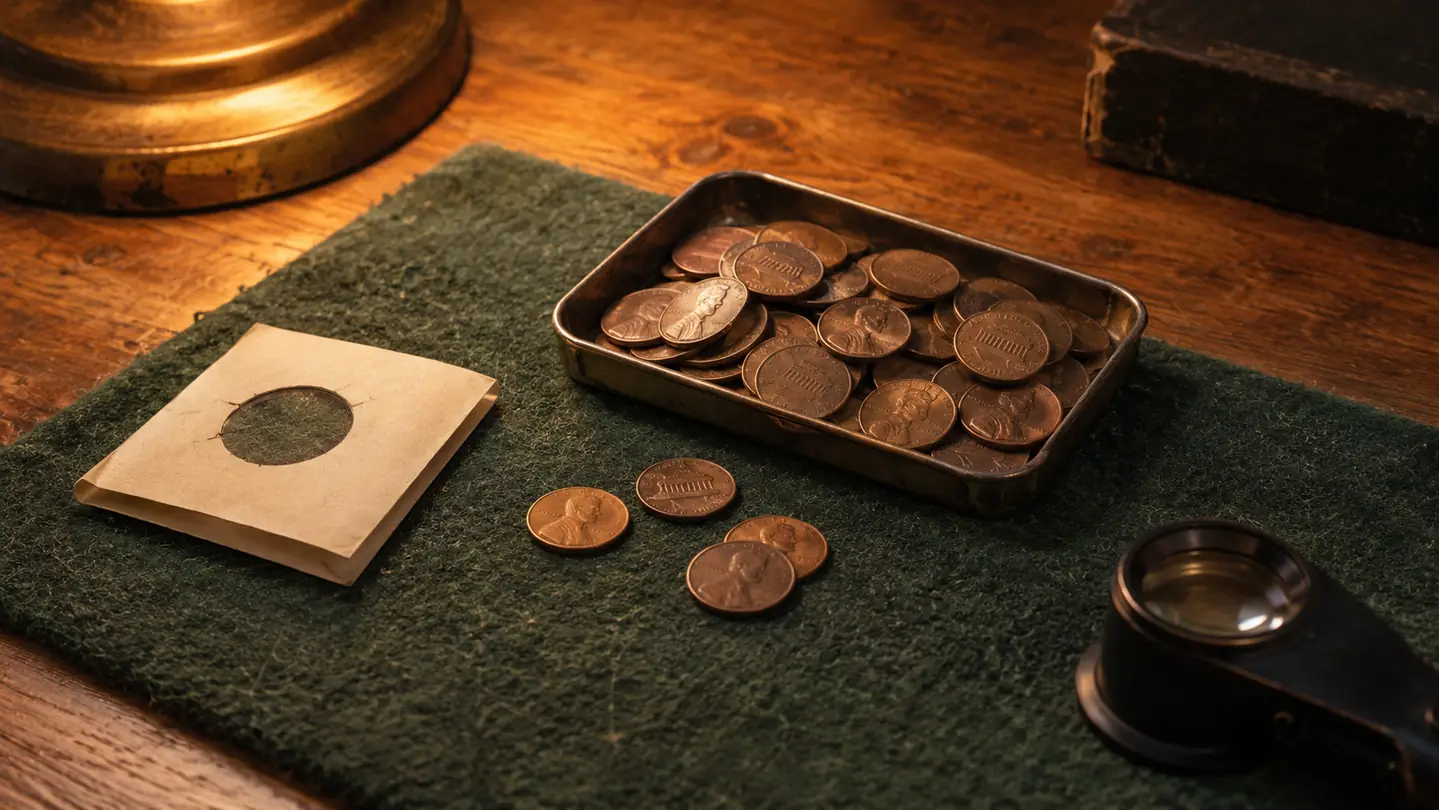
My granddaughter Maddie is nine and comes by on weekends. She has her own shoebox of wheat cents, sorted by decade, and she is quicker at spotting a repunched date than I am, mostly because she has not yet learned to expect nothing. We work at my desk with a lamp, a felt pad and a paper flip for anything that looks promising. The JARLINK sits between us. She uses the 30X, I check behind her with the same lens, and the 60X comes out maybe once a session, when we are trying to decide whether a mark is a crack or a scratch.
The first thing I noticed is the working distance. With the 30X you hold the loupe a short way off the coin, not pressed against it, and you focus by moving your hand and your head together. Rest your elbows on the desk. Breathe through your nose. That is not a defect, it is how a loupe works, but it is the thing no product photo can show you. For the first few evenings I was chasing focus like a man swatting a fly. Carol came in once, watched for a minute, and said I looked like I was trying to read a newspaper through a keyhole. She was not wrong.
The coin that taught me the most was not a rare one. It was a common date with a patch of green verdigris on the reverse, and under the 30X I could see the corrosion had pitted the surface in a way the naked eye reads as a smudge. That is the sort of thing a loupe is for: not finding treasure, but learning what damage looks like so you stop making it. I have ruined a coin or two in my time, and most of that came from handling before I knew better.
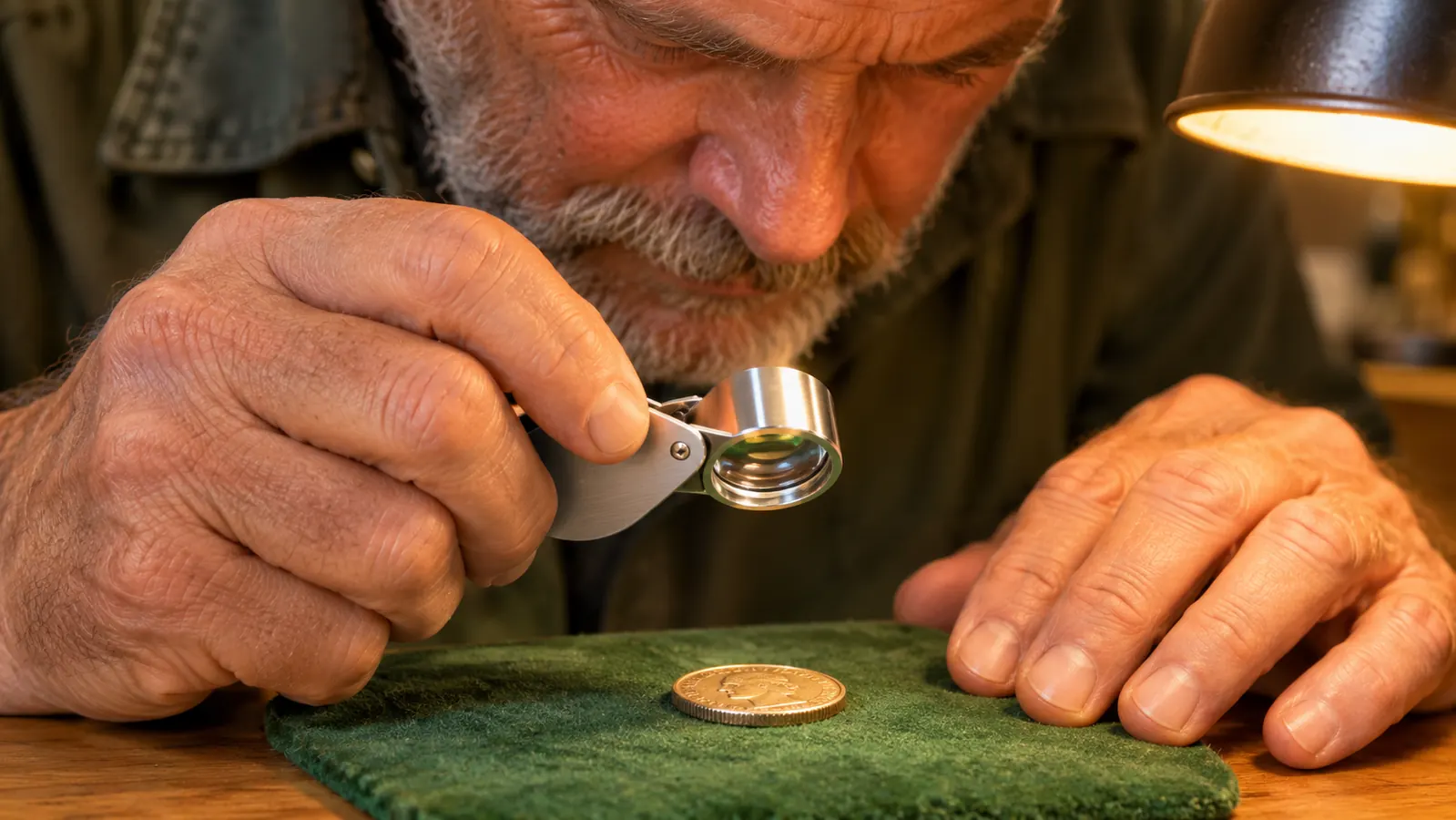
The second thing is that the light does most of the work. A wheat cent is a low-relief coin with a lot of small, worn detail, and under the LED the date and the mint mark come up out of the field in a way they simply do not under my desk lamp alone. On one worn 1920s cent, the light was the difference between seeing a mint mark and seeing a contact mark. I checked it three times before I believed it.
The Light Does More Than the Magnification
Take the LED out of the equation and this becomes a much more ordinary tool. Coins are reflective, and a loupe with no light forces you to angle the coin to catch the lamp, which means one hand is holding the flip, one is holding the loupe, and now you need a third to tilt the coin. The LED removes that. You point the lens, the light lands on the field, and both hands stay where they are.
The tradeoff is glare. On a proof surface or a bright silver dollar, the light can wash out the very thing you are trying to see. The fix is to tilt the loupe a few degrees rather than moving the coin, which keeps your focus intact. I learned that from a club member at the monthly meeting, not from the manual, and it took me a month to stop fighting the reflection.
Battery life is the other part of the light nobody mentions. Three LR1130 button cells are in the box. They are not cells you keep in the kitchen drawer, so when the light starts to dim you will be ordering them, not borrowing them. I keep a spare card of LR1130s in the desk drawer with the flips now. It is a small thing until the evening you sit down to work, the light comes on weak, and you have a coin in the flip you cannot see properly.
On one worn 1920s cent, the LED was the difference between a mint mark and a contact mark. I checked three times before I believed my own eyes.
The 60X Lens Is Not the One You'll Use
Sixty power sounds like twice the tool. It is not. The 60X lens is a 12mm supplementary lens, and at that magnification the field of view is small enough that you are looking at a patch of the coin roughly the size of the date, not the whole coin. The working distance shrinks too, which makes the hand-holding problem worse. The first time I used it, I spent two minutes finding the mint mark and then lost it when I breathed.
Where it earns its keep is on a specific question. Is that a die crack or a scratch? Is the 9 in the date repunched, or is it wear? Is the rim bruised, or is that a collar clash? For those, the extra power is genuinely useful and you will be glad it is there. For general grading, for checking a date and mint mark, and for getting a feel for a coin, the 30X is the lens you reach for nine times out of ten.
The two lenses are one unit, not a swap. You look through the primary lens and the supplementary one does its work in the center of the field. That is convenient, and it also means you do not get to choose a comfortable eye position for the 60X. You get what the tool gives you, and what it gives you is a short, close view that is fine for a quick check and tiring for a long one. Maddie, who has nine-year-old eyes, has no such complaint.
Focus Is a Hand Skill, Not a Feature
There is no focus knob on this loupe. Focus comes from distance, and distance comes from your arms. That is true of most loupes and it is worth saying plainly, because the alternative is a reader buying one and wondering whether theirs is broken. What you are learning is a small motor skill: elbows planted, the loupe held at a consistent height, your head moving a few millimeters rather than your whole arm.
The way I teach it to Maddie is the way I was taught to use a file. Lock your wrists, move from the shoulder, and go slow enough that you can feel the correction before you see it. With a coin, the equivalent is: set the loupe down over the coin, bring your eye to it, then move your head. If you move the coin instead, you lose your reference point and you will not be able to compare two areas of the same coin.
It took me about two weeks of short evening sessions before it felt natural. The first sessions ran ten minutes and ended with a stiff neck. Now I can work for half an hour without thinking about it. That is a normal learning curve for a hand tool, and it is the part a product page cannot tell you. If you want something you can hand to a guest and have them see perfectly on the first try, this is not it.
The Fiddly Bits: Batteries, Screw, Bag
The box contains the loupe, a fabric bag, a manual, three LR1130 button cells and one small screw. The bag matters more than it looks. A resin lens and a pocket full of keys are not friends, and the bag is the difference between a lens that stays clear and one that collects a haze of fine scratches. I keep the loupe in the bag whenever it is not on the desk, and I have not had a cleaning problem yet.
The screw is the other tell. Anything that small is a part you will lose, so a spare in the box is quietly sensible. It also tells you the battery side of this loupe is a small job, the kind you do at the desk with a saucer to catch the parts, not something you open on a whim.
Weight is 27 grams, a bit over an ounce, and the dimensions are 1.6 by 2 inches. In the hand it feels like nothing, which is good for long sessions and bad for the one thing that keeps happening to me. I set it down somewhere on the desk, get distracted by a flip, and spend a minute patting around for it. A dedicated spot on the felt pad solved that. Small tools need a home.
The Resin Lens, and What It Means Day to Day
The lenses are resin, not glass. That is worth knowing before you buy, because resin is lighter and tougher against a drop but softer against grit and cleaning. The practical rule is the one I use on any plastic optic: brush or blow off dust first, then wipe with a clean microfiber, never a shirttail. A gritty wipe on resin is how you make a permanent scratch, and a scratched lens is not something you can polish out at the kitchen table.
In daily use I have no complaint. The image is clean enough to read a mint mark and bright enough to work under a lamp. It is not the equal of a good glass loupe at higher power, and I would not pretend otherwise. But a glass loupe that lives in a drawer and never comes out is worth less to a hobbyist than a resin one that does. That is the trade, and for a desk tool I think it is the right one.
The other resin quirk is that it shows smudges. You will be wiping this lens more often than you expect, especially if you are the sort of person who touches the lens to check whether it is clean. Keep a microfiber cloth in the drawer and use it. That one habit has done more for my viewing than any other single change.
What I'd Change After a Few Months
Two things. First, I would like the light to have a lower setting for bright silver. The glare problem is solvable by tilting, but a dimmer option would be more elegant. Second, I would like a small tether or a clip on the bag, because a 27-gram tool in a fabric bag is exactly the sort of thing that migrates to the bottom of a drawer. Neither of these is a defect. They are the improvements you only think of after a few months of use.
I would change nothing about the 30X lens on the JARLINK. That is the part I would replace like for like if it ever died. The dual lens arrangement does mean the 60X is always there, and I have come to like that even though I use it rarely. It is a small tool with one job done well and a second job done adequately. That is an honest description, and it is more than I can say for most things on my desk.
What I Liked
- The 30X lens and the LED together show worn date and mint mark detail that a desk lamp alone misses
- Three LR1130 cells, a fabric bag and a spare screw come in the box
- 27 grams and 1.6 by 2 inches, so it disappears in the hand during long sessions
- The 60X supplementary lens answers specific questions about cracks, repunching and rim damage
Where It Falls Short
- No focus adjustment, so you learn to focus with your hands and your head
- Glare on bright silver and proof surfaces takes a tilt of the wrist to manage
- The 60X field is small and the working distance is short, which makes it tiring for long checks
- Resin lenses need a dust-free wipe, and LR1130 cells are not a kitchen drawer staple
Who This Is For
The JARLINK is a desk loupe for a hobbyist who already has a lamp, a felt pad and a reason to look closely. If you are sorting wheat cents, checking mint marks, looking for repunched dates, or teaching someone younger than you how to see, the 30X and the light will do the work. It is also a sensible first loupe for a club newbie who does not yet know what magnification they prefer. At 30X you can see enough to learn, and the 60X lets you push further when a specific question comes up.
Who Should Skip It
Skip it if what you really want is a stereo microscope, a camera mount, or a light you can dim. A loupe is not any of those. Skip it if you refuse to learn the hand technique, because no amount of magnification fixes a moving coin. And skip it if the idea of keeping track of three button cells and one small screw sounds like more trouble than the view is worth. Those are reasonable things to want, and this loupe does not have them.
One lens does the daily work. The other answers the hard questions.
If your coins live on a felt pad under a lamp, this is the loupe I would hand you. Start at 30X, keep the bag on it, and buy the button cells before you need them.
Amazon Check Today's Price on Amazon →