

There is a detail about cotton gloves that almost no listing bothers to mention, and it took me two bad purchases to learn it. Most cotton gloves sold in bulk are made for dry hands. You put a cream on, you pull a glove on, you go to sleep. The fabric is chosen for how it feels against skin, and nobody at the factory is thinking about a 90 year old copper surface or the oil that lives in the ridges of your thumb. A glove can feel wonderful on your hand and still shed lint into the lettering of a wheat cent, and once a fiber is wedged behind the B in LIBERTY you are down there with a toothpick and a bad attitude. The DOVORTEX 12 piece set is the third kind I have bought and the first one I have kept using past the second month.
I should say who is doing the reviewing. I am Ray Delcourt, 63, retired out of a machine shop here in Dayton, Ohio. My grandfather handed me a coffee can of wheat cents when I was 11 and I never entirely put it down. After I retired I got serious about it again: a wheat cent book, a modest run of Morgan dollars, a desk in the spare bedroom with a lamp, a felt pad, and a small fireproof box in the closet. I am not a dealer and I am not going to tell you what anything is worth. I handle coins, I sort them, and I have ruined one or two by being careless, which is where most of what I know comes from.
The Quick Verdict
Six pairs, one size, ambidextrous. Thin enough that you can feel a coin's rim through the fabric, breathable enough for a two hour sorting session, and they came out of the laundry with the seams intact. One size fits all is the honest weak point.
Amazon Check Today's Price →Six Pairs, One Size, and They Survive the Laundry
This is the set sitting beside my felt pad right now. Twelve pieces, six pairs, long enough to cover the wrist and thin enough that you can still feel what you are holding. If you handle coins more than once a week, buy the multi pack and stop thinking about it.
Amazon Check Today's Price on Amazon →What Nobody Tells You About Cotton Gloves
Cotton gloves get sold for three different jobs and the listings blur them together. Job one is holding moisture on your hands after a cream. Job two is dusting, polishing, wiping down a shelf. Job three is handling something you would rather your skin did not touch: a coin, a piece of jewelry, a photograph. Gloves for jobs one and two are built thick, often brushed on the inside, sometimes with a stitched hem at the cuff. Gloves for job three need the opposite. Thin fabric, a snug fingertip, a seam that does not sit on the pad of your finger where it will drag across a surface. Buying a job one glove for a job three task is the most common mistake I see, and I made it twice.
Lint is the thing to worry about most and the thing nobody warns you about. A cotton fiber is soft, which is why we use it, but soft is not the same as harmless. Drag a loose fiber across the field of a proof coin and you can leave a hairline that was not there before. On a circulated wheat cent you will probably never see it. On a mirror finish Morgan dollar, in the wrong light, you will. That is why the first thing I do with any new pair is turn them inside out over a dark cloth and look at what falls. The DOVORTEX pairs shed a little on the first wearing and then settled down after one wash. That is normal for cotton and it is not a defect, but you want to know it before you touch anything nice.
The other thing nobody says out loud is that bulk cotton gloves almost always come in one size. This set is listed as Large, ambidextrous, pull on, and the cuff is long enough to cover the wrist. That is genuinely useful, and it also means the fit is a compromise. Ambidextrous means no left glove and no right glove, so the fabric stretches to whichever hand you put it on first and stays there. Fine for handling coins. Less fine if you want a glove that fits like it was made for you. If your hands run small, you will notice it within a minute.
How I've Used Them
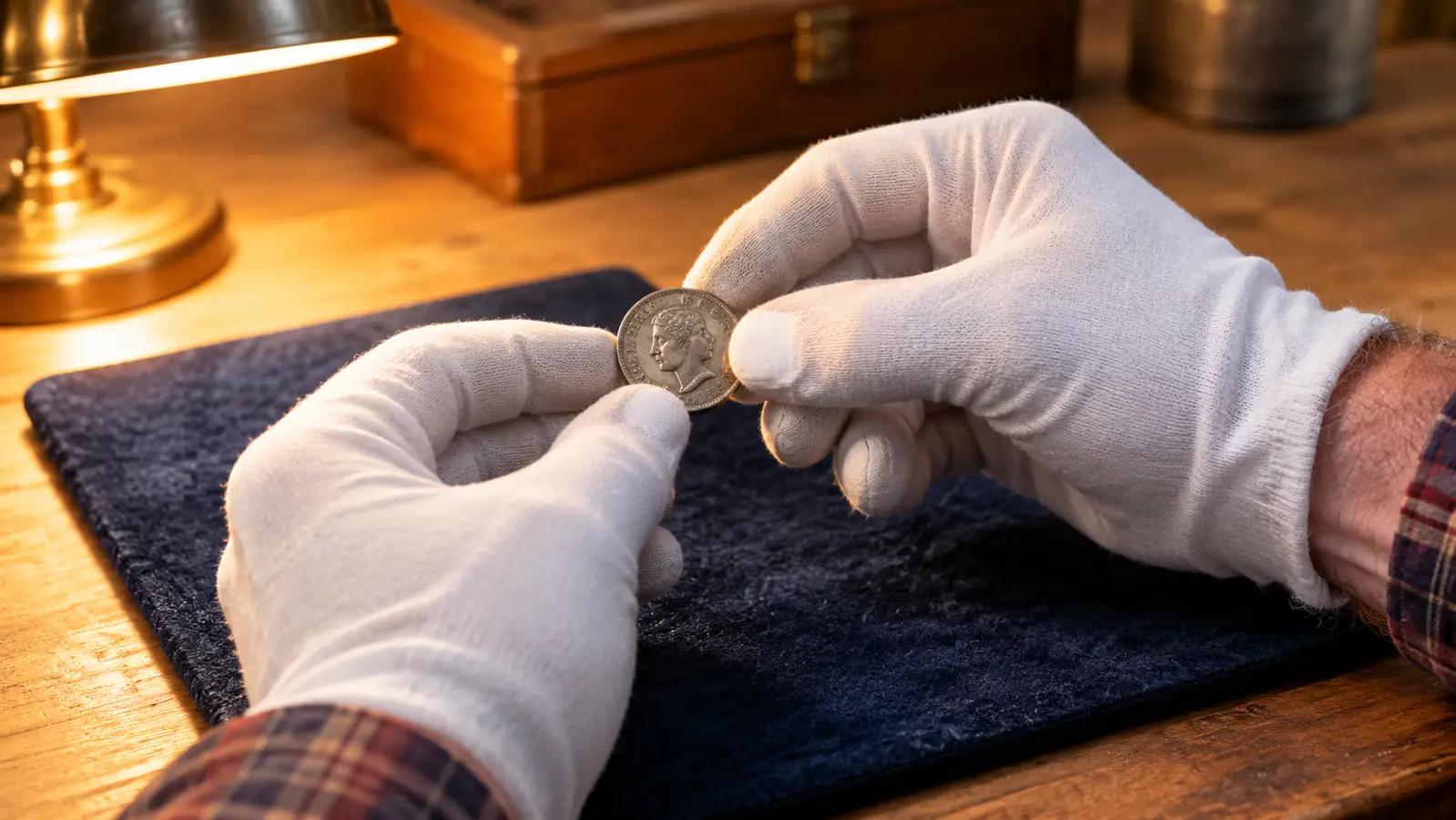
My coin time happens at a desk in the spare bedroom, usually in the evening, with a lamp on the left and a felt pad in the middle. A session runs an hour, sometimes two if I am sorting a batch of wheat cents out of a bag I bought at the club. I put a pair on before I open the box and I take them off before I touch the doorknob, because a doorknob is where the oil and the grit live. That is the whole protocol. The gloves are the first step of it, the simplest part of the operation, and the part that does the most work.
My granddaughter Maddie is 9 and she comes over on weekends, and I have been teaching her the hobby one coin at a time. A pair of these gloves swallows her hands. We solved it by rolling the cuff back twice, which works well enough for about ten minutes before it comes loose again. She does not mind much. What she does mind is being told to put them on, so I have learned to make it a game about fingerprints instead of a rule, and that works better. If you have small hands in the house, plan on the rolled cuff.
Once a month the local coin club meets and everybody passes things around the tables. I bring my own gloves now. Not because I think the fellow beside me is careless, but because a room full of hands over a tray of Morgans is a room full of oil, and it costs me nothing to bring the gloves. This is the sort of thing that sounds fussy until the evening you watch somebody pick up a mirror finish dollar by the face with a bare thumb.
The Fit, Honestly
Listed size is Large and the length is meant to be long enough for both men and women, covering the wrist. On my hands that is accurate. I wear a large work glove and these come to just below the wrist bone with a little slack across the palm. The stretch is real but modest, and it comes from the knit rather than from elastic, so it does not pinch and it does not leave a mark. The pull on cuff is a plain opening with no elastic band, which means it goes on easy, comes off easy, and does not snap back at you. The whole pack of twelve pieces is listed at 0.11 kg, which tells you something about how thin the fabric is before you even open it.
The ambidextrous thing matters more than I expected. When I am sorting, I take a glove off to write a note or turn a page, and I do not have to think about which hand it belongs to. I just put it back on whichever hand is free. Over two hours that is maybe fifteen small fumbles avoided, and small fumbles are how coins get dropped. A dropped wheat cent is nothing. A dropped Morgan dollar on a hardwood floor is a bad evening that you remember for years.
The wrist coverage is the part I would not give up. Most of the oil that gets onto a coin comes off the heel of your hand and the inside of your wrist, not your fingertips, because that is where your hand rests when you are leaning over a pad. A glove that stops at the knuckles leaves that skin exposed and you will not notice it happening. These cover past it. That single design choice is worth more to me than anything else in the listing.
The Fabric, and What It Does to a Coin
The material is cotton, knit, thin, and the listing calls it absorbent and breathable. Both are true in practice and both matter for a reason that is not obvious. Absorbent means the fabric pulls moisture off your skin instead of letting it sit there. Breathable means air moves through, so a two hour session does not turn your hands into a swamp. I have worn nitrile gloves through a full afternoon of sorting and there is a reason I stopped. Your hands cook. You peel the glove off and your fingers are pruned and wet, and then you touch a coin. Cotton does not do that to you.
The listing says powder free and alcohol free, and it says not water resistant, which is honest of it. These are not a barrier glove. If you wash your hands and pull them on damp, the cotton takes the water and holds it against your skin, which is exactly what you do not want anywhere near a coin. So the rule is wash, dry completely, then glove. That is not a fault in the product. It is what cotton is. If you want a glove you can wear while handling a damp paper towel, buy nitrile and accept the sweat.
What cotton does better than anything else at this job is let you feel what you are holding. I can turn a wheat cent over and feel the rim and the relief through the fabric without taking the glove off. That sounds like a small thing. It is not. Being able to feel the edge of a coin is how you keep from pressing too hard on the field, and pressing too hard is how you put a thumbprint where you did not want one.
What I Liked
- Six pairs in the pack, so a grubby pair can be retired without ceremony
- Thin knit lets you feel a coin's rim and relief through the fabric
- The cuff runs long enough to cover the wrist, which is where most hand oil sits
- Ambidextrous, so you never hunt for the left one
- Breathable enough for a two hour sorting session without pruning your fingers
- Powder free and alcohol free, and the seams held through the laundry
Where It Falls Short
- One size only, listed as Large, so small hands swim in them
- Sheds a little lint on the very first wearing, before the first wash
- Not water resistant at all, so damp hands stay damp
- The cuff edge frays before anything else does
- No grip texture, which matters if you also handle coins in hard plastic slabs
Wash Wear: Six Weeks of Laundry
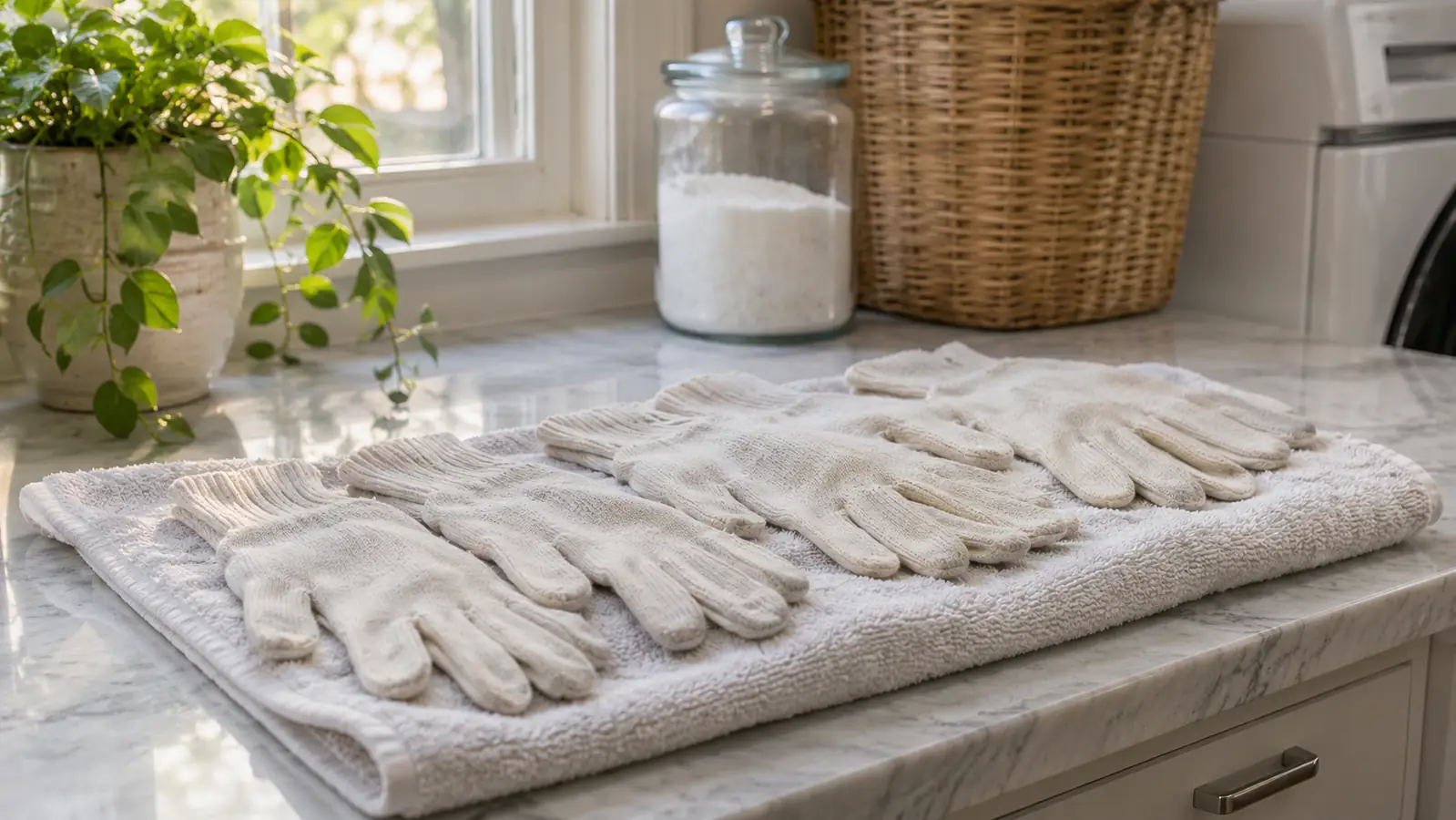
I wash mine. That is not a promise in the listing, it is just what I do, and I have run this DOVORTEX set through the laundry eight times in six weeks. Warm water, regular load, tumble dry low with everything else. Here is what happened. The first pair shrank a little in the first wash and then stopped shrinking. The seams at the fingers stayed closed on every pair. The cuff edge on the two pairs I wear most has started to fray, one thread working loose, and that is the first real wear I have found. No holes at the fingertips, which is where I expected them.
Washing changes the feel. A new pair is a little crisp and a washed pair is softer and sits closer to the hand. I prefer the washed pair for handling coins because softer fabric drags less across a surface. The tradeoff is that a soft worn glove sheds more than a fresh one, so the pairs I use on the Morgans are the ones with the least wear on them. That is a rotation, not a problem. Six pairs is what makes the rotation possible. That is the actual argument for the multi pack, and it has nothing to do with the count on the box.
One more honest note on laundry. Turn them inside out before you wash them, because dust and skin cells collect on the inside, and the inside is the side that ends up against your fingers. I did not do this for the first month. I am telling you now so you do not make the same mistake I did. It is not a defect in the glove. It is a defect in the owner.
Eight trips through the laundry in six weeks, and the seams on every pair were still closed. The cuff edge on the two I wear most had frayed to one loose thread. That is the honest summary.
Who This Is For
This is for the person who handles coins more than once a month and has been doing it bare handed, or in a pair of winter gloves, or in the thin cotton things from a craft store that shed like a cat. It is for the person sorting an inherited collection on the kitchen table and wondering why the coins look duller than they did in the album. It is for the jewelry person, the photograph person, anyone handling a surface they would like to keep the way it is. It is also for the club member who wants a clean pair in the car so they stop being the one who forgot.
Who Should Skip It
Skip it if your hands run small. There is one size here, listed as Large, and no amount of rolling the cuff fixes a glove that is swimming on a nine year old. Skip it if what you actually want is grip, because these have no texture and a coin inside a hard plastic slab will slide. Skip it if you handle coins with wet hands, since cotton is not water resistant and a damp glove held against a coin is worse than a bare dry hand. And skip the multi pack if you handle coins twice a year. Buy one pair, wash it, and find out whether you actually keep the habit. Six pairs is for people who already know they will.
The Pair That Lives Beside the Felt Pad
Twelve pieces, six pairs, long enough to cover the wrist and thin enough to feel a rim through. Wash them, rotate them, retire the grubby ones. That is the whole system, and it costs you one decision instead of twenty.
Amazon Check Today's Price on Amazon →