
The first coin I ever ruined, I ruined with a thumb. A 1935 Lincoln cent, common as dirt and an honest coin, and I picked it up out of a dealer's tray bare-handed at a church basement show the summer I turned twenty-two. There is a dull oval on the obverse today where my thumb sat for maybe two seconds. It has not come off in forty years and it is not going to. That is the whole lesson, and it took four seconds to learn and about two decades to stop being sore about it.
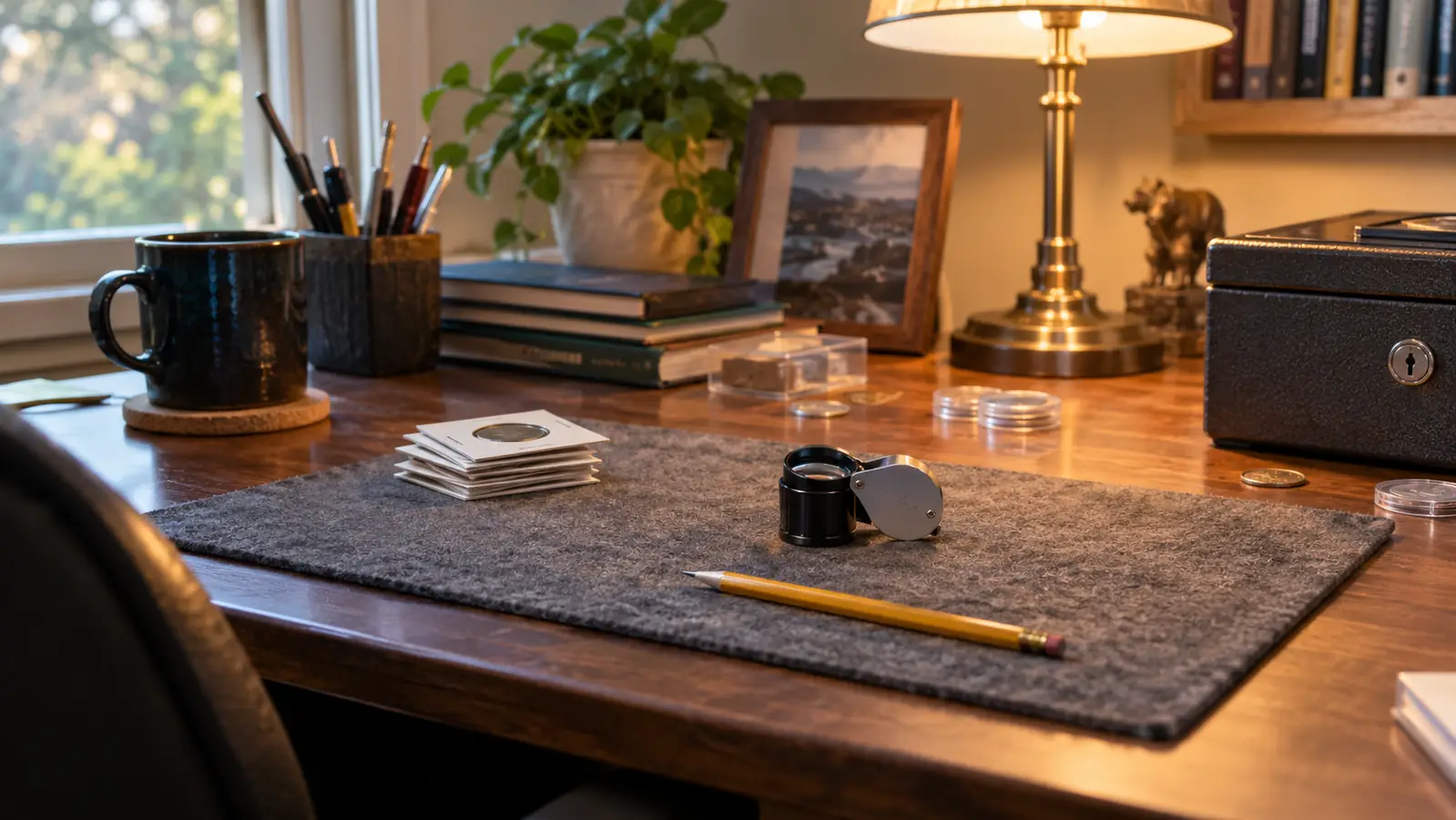
These days the gloves live on the corner of my desk in the spare bedroom, next to the lamp and the felt pad. They are DOVORTEX cotton gloves, twelve pieces to a pack, which works out to six pairs, and I have run the same rotation through most of a year of weekend sessions with my granddaughter Maddie. She is nine. She sorts wheat cents by date and mint mark and she already has better handling habits than I did at thirty, mostly because she has never once handled a coin without a glove on. Buying a bulk pack instead of one pair is the reason that was possible.
The Quick Verdict
Thin, absorbent cotton that covers the wrist and still lets you feel a reeded edge. The side seams are the weak spot and one size will not suit every hand, but for coin work at a desk I would not change much.
Amazon Check Today's Price →Six pairs means you stop rationing the one clean glove
Twelve pieces, sized long enough to cover the wrist, thin enough that your fingertips still know a rim ding from a contact mark. That is the entire job and it does it.
Amazon Check Today's Price on Amazon →How I've Used It
My setup is not fancy. A desk, a lamp, a felt pad, a loupe, and a small fireproof box in the closet for the Morgans. Before the gloves, my routine was wash hands, dry hands, handle coins for twenty minutes, feel my hands go clammy, wash again, repeat. The gloves cut the middle out of that. I pull a pair on before I open a tube and I keep them on until everything is back in the box and the lid is down.
Maddie gets her own pair, and this matters more than it sounds. A nine year old's hands are damp and busy. She wants to turn a coin over six times, hold it to the lamp, set it down, pick it back up. With gloves on she can do all of that and I am not leaning over her shoulder saying careful, careful, careful every four seconds. The gloves did more for her handling habits in a month than my nagging did in three, and I am not too proud to say so.
The session that convinced me was a Saturday in March, a gallon bag of unsorted wheat cents from the club meeting and Maddie working through them in rows of ten. Two hours in she had handled four hundred coins, her hands were warm, and she was still going. Before the gloves I would have stopped her at sixty. We finished the bag, and I wrote the date and the count in a notebook, which is a habit from the shop floor I have never shaken.
I use them for the wheat cents, the Morgans, and the handful of junk silver I keep in a cigar box. One pair lives in my coat pocket for whatever I fish out of pocket change at the counter. One pair stays folded inside the fireproof box so there is never an excuse to open it bare-handed. The rest go through the wash in rotation. In a year of weekends I have not found a coin task where reaching for one of these was the wrong move.
What Cotton Actually Does About Fingerprints
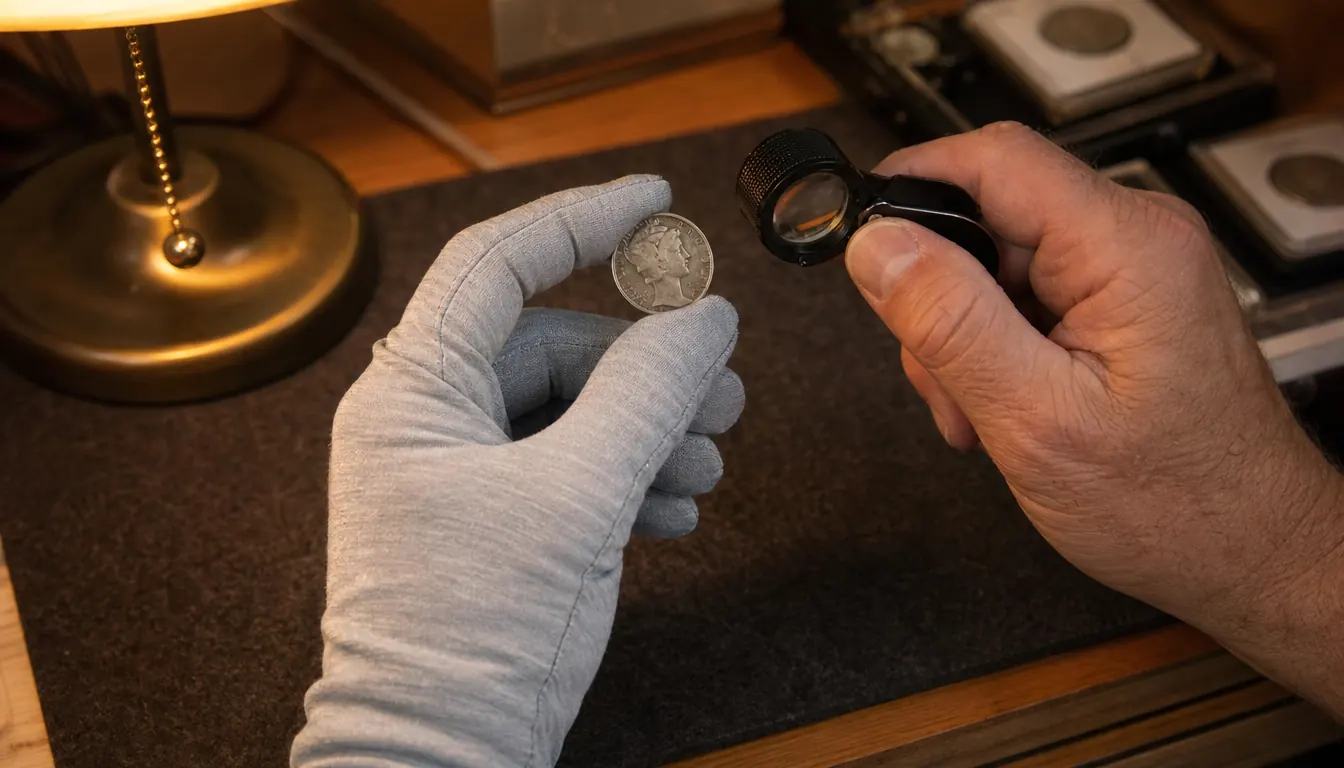
Your skin puts out oil and sweat and a little salt, and on a copper or silver surface that film goes to work slowly. It is not dramatic. A print that looks like nothing in July is a brown ghost by Christmas. On copper it can eventually turn into a faint green dot, and once that starts, the metal underneath is not coming back to what it was.
Cotton absorbs. That is the whole mechanism and it is enough. Your hand sweats inside the glove, the cotton takes it, and the coin never sees it. The listing calls these absorbent and breathable, and after a summer of use I will say both are accurate. My hands do not cook inside them the way they do inside a rubber glove, which is the reason I stopped wearing nitrile at the desk. Nitrile is the better barrier. It is also a sauna, and a sweaty hand inside any glove is its own problem.
What I did not expect was how much feel I kept. You can still tell a reeded edge from a smooth one, a rim ding from a contact mark, a coin that rings from one that clinks. That matters when you are sorting a tube of wheat cents and your fingers are doing the first pass before your eyes catch up. A glove that deadens your fingertips makes the work twice as slow, and I have quit on gloves for exactly that reason.
I tested the difference on purpose one evening, which I do not recommend. I set a common 1944 wheat cent on the pad, handled it bare for thirty seconds with a clean dry hand, and left it under the lamp. Three weeks later the thumb side had gone from a bright brown to a smudged one. The coin beside it, same grade, handled with a DOVORTEX glove the same night, looked exactly as it had at the start. That is not a scientific test. It is enough of one for me.
A print that costs you nothing in July is a brown ghost by Christmas, and no amount of rubbing puts the metal back.
Fit, Wrist Coverage, and Six Pairs of Headroom
These are one size, listed as six pair, with a large length that the listing says is long enough for both men and women to cover the wrist. On my hands, which are wide across the knuckles and short in the finger from too many years on a lathe, they come up over the wrist bone and stay there. Carol's hands are narrower and the same pair works on her with slack at the fingertips. She borrowed one for dusting the shelf of coin books and did not hand it back for a week.
For the record, my right hand measures about eight and a half inches around the palm and a shade over seven from the base of the hand to the tip of the middle finger. The glove has room across the palm and maybe half an inch of slack at the fingertips, which is where I want it. Tighter and I would lose the feel I just spent three paragraphs praising.
The wrist coverage is not a small detail. When you reach into a tube or a shallow box, the back of your wrist brushes the rim of the coin beside the one you are picking up. A short glove that stops at the base of the hand leaves that patch of skin in play against the next coin in the stack. That is the kind of thing you do not notice until you notice a dull spot on a coin you thought you had been careful with.
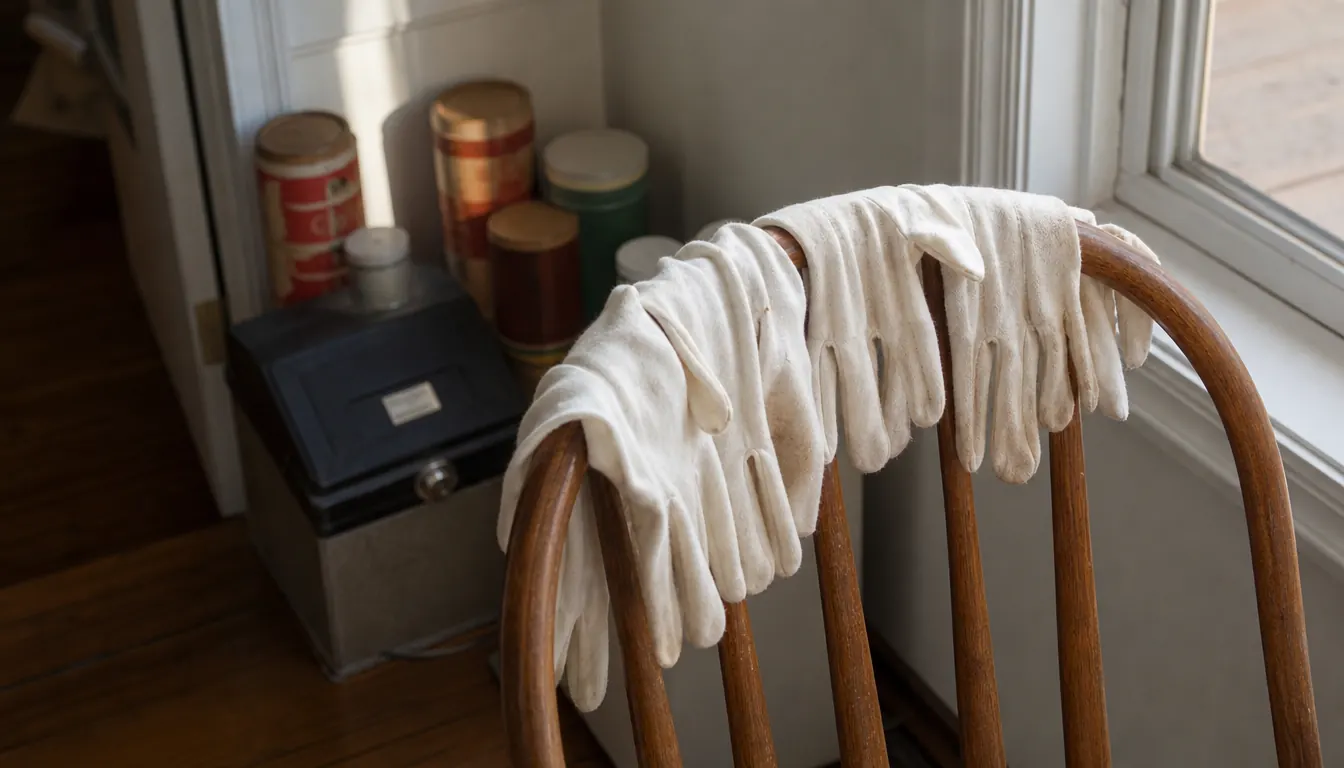
The six pair count is the part I did not appreciate until I had them. One pair on the desk, one in the coat pocket, one in the box, one in the wash, one drying over the chair back, one spare. A single pair would have me washing gloves instead of sorting cents, and I know precisely how that ends, which is with me handling coins bare-handed because the glove is damp.
There is no closure. They pull on. No snap, no elastic band cutting a red line across the wrist. That suits me fine. The trade is that a loose pair will ride up your hand if you are doing something vigorous, and you should not be doing anything vigorous with a coin in your fingers anyway.
What the Gloves Do Not Fix
A glove does not stop humidity. It does not stop a soft vinyl flip from outgassing onto a coin. It will not rescue a coin that was already hazed when you bought it. I keep a couple of silica packs in the fireproof box and swap them twice a year, and I stopped using the soft flips entirely after a set of wheat cents went tacky on me. That was a glove problem only in the sense that I had gloves on while I put them into the wrong holder.
It also does not make a coin better. Nothing makes a coin better. All careful handling does is slow the rate at which a coin gets worse, and that is a smaller promise than most hobby writing out there makes. If you are hoping a pair of cotton gloves turns a circulated coin into something a grading service writes home about, put that hope down gently and keep the gloves anyway.
The other limit is that they are not water resistant. A damp glove is worse than no glove, because you have built a small wet compress and pressed it against the surface you were trying to protect. Dry your hands first. It sounds obvious. I did it wrong twice before it stuck.
The box gets opened the first Sunday of the month and I check the silica packs then. In July the indicator on one had gone pink and I swapped it. That is the whole routine: gloves for the hands, packs for the box, neither one standing in for the other.
What I Tried Before These
Before the DOVORTEX set I went through three things. Bare hands, which we have already covered. A box of nitrile gloves from the hardware store, which is a genuine barrier but turns your hands into a swamp inside ten minutes and leaves you with a glove full of sweat and no clean way to peel it off. And a pair of thin dress gloves I had in a drawer, which were handsome and useless, because the leather had a finish on it and I did not like the idea of whatever that finish was sitting against a copper surface.
The cotton wins on the thing I actually care about, which is that I can wear a pair for an hour and forget it is on. The nitrile stays in the shop for staining and solvent work where it belongs. The dress gloves went to a wedding.
Washing Them and What Wears Out First
I wash mine by hand in warm water with a drop of dish soap, no bleach, and I lay them flat on a towel to dry rather than putting them through the dryer. They come out a little stiff and soften back up after a few minutes of wear. The pairs I have washed a dozen times are still doing the job at the desk.
The side seam is what goes first on mine, a small split near the base of the thumb, usually somewhere after a couple dozen washings. Not a hole, just a run. I retire those to dusting and box-wiping duty and pull a fresh pair for coins. With six pairs in the pack that handoff is not a crisis. With one pair it would be, which is the argument for the bulk pack in one sentence.
I also keep the washed ones and the unwashed ones in separate spots, which sounds fussy until you have pulled a pair out of the basket, smelled dish soap, and wondered whether it was dry. Two paper bags on the shelf, one marked, and the problem is solved.
What I Liked
- Twelve pieces, six pairs, so there is always a dry pair within reach
- Absorbent cotton keeps the sweat off your hands and off the coin
- Long enough to cover the wrist bone on a wide hand
- Thin enough to feel a reeded edge, a rim ding, or a contact mark
- Stretchable and ambidextrous, so there is no left and right to sort through
- Powder free and alcohol free according to the listing
Where It Falls Short
- One size, so narrow hands get slack at the fingertips
- Pull on only, no closure, so a loose pair can ride up
- The side seams are the first thing to give out after enough washings
- Not water resistant, so a damp hand goes straight through
- Does nothing about humidity, PVC flips, or a coin that was already hazed
Who This Is For
This is for the person who already has a box of coins and has started to notice the nicer ones are not staying nice. It is for the parent or grandparent teaching a kid the hobby, because a bulk pack means the kid gets their own pair and you stop hovering over their hands. It is for the club member who brings a shoebox to the monthly meeting and ends up handling everybody else's coins for an hour. And it is for anyone who, like me, owns one coin with a thumbprint on it and has decided there will not be a second.
Who Should Skip It
If your coins live in a folder and come out twice a year, one pair is plenty and this is more glove than you need. If you want a barrier glove for dips or solvents, cotton is the wrong material for that job and you want nitrile instead. If everything you own is in a slab, the plastic is already doing the work. And if one size has never fit you in anything you have ever bought, these will not be the exception.
The simplest insurance in this hobby is a clean pair within reach
Twelve pieces, six pairs, wrist coverage, and enough feeling left in your fingertips to sort a whole tube. Keep one pair at the desk, one in the box, and the rest in the wash rotation.
Amazon Check Today's Price on Amazon →