
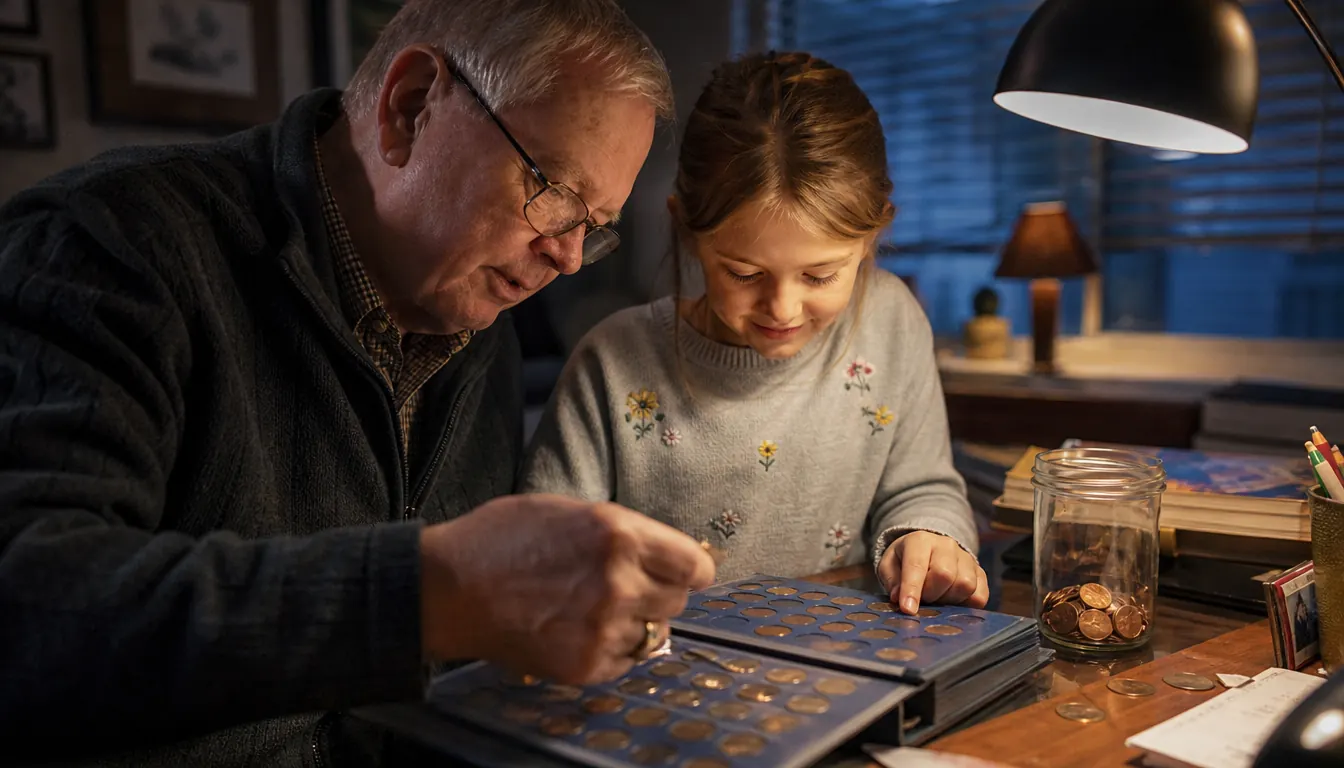
The coffee can sat on my grandfather's workbench for as long as I can remember. When I was eleven, he handed it to me. It was full of Lincoln wheat cents, most of them worn smooth, and I had no idea what to do with them except dump them on the floor and read the dates. I lost more than a few that way. My grandfather never said a word about it.
I retired from the shop in Dayton as a machinist a few years back, and the hobby came with me. On weekends my granddaughter Maddie, who is nine, sits at the spare-room desk with me. Carol calls it the coin desk. Maddie calls it the date desk. This spring I finally moved the wheat cents out of the coffee can and into a Whitman Lincoln Cents Folder #2, 1941-1974. That is the plain name on the folder, and it tells you exactly what it is for.
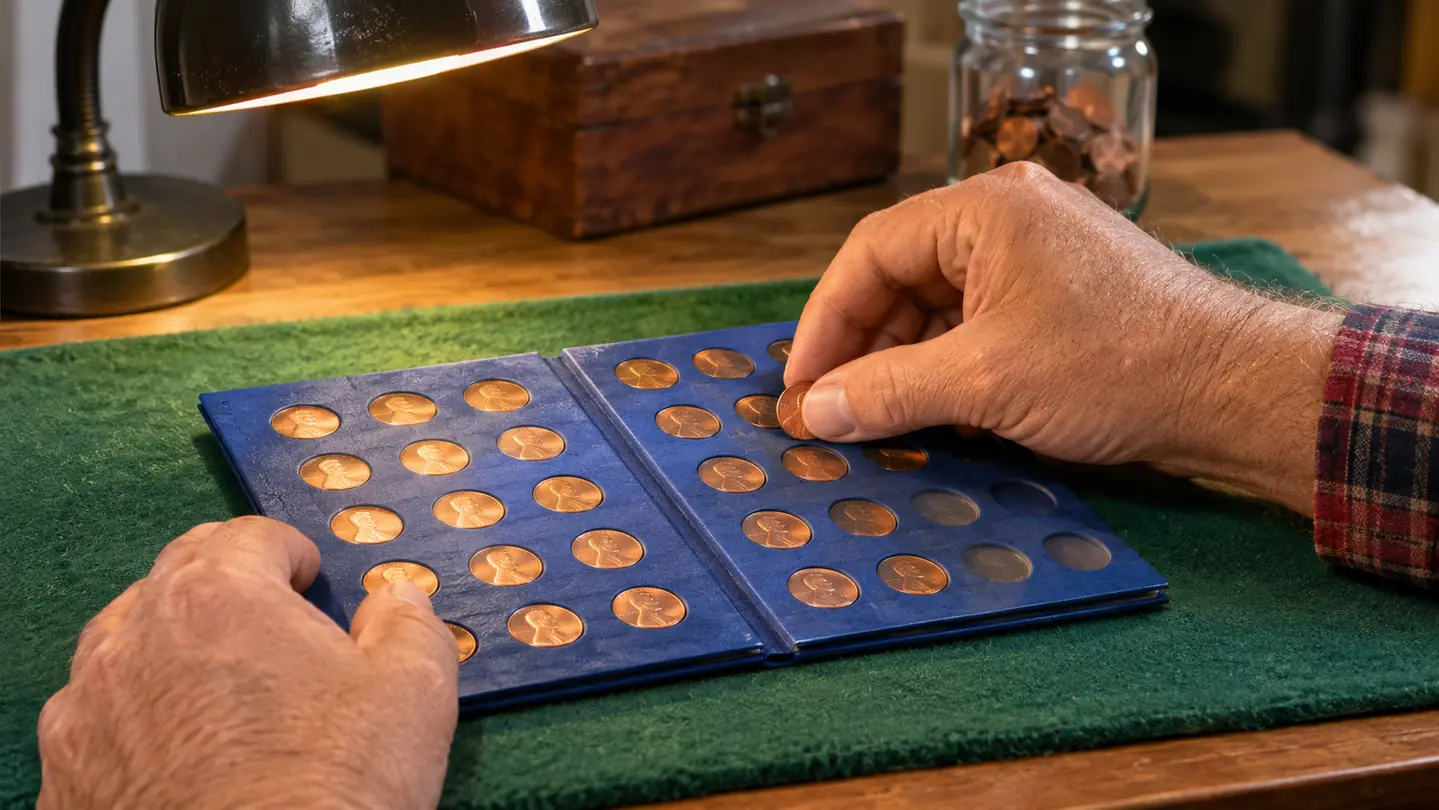
I did not buy the Whitman folder because I thought it would make me money. I bought it because the can had turned a hobby into a pile. A folder asks you to put one cent in one place. The folder covers the 1941 through 1974 run, which gave Maddie and me a clear stopping point. We could sort what we had, see the gaps, and stop arguing about where the 1943 belonged.
The folder is listed at 7.88 by 5.76 by 0.28 inches and 3.21 ounces. That is small enough to sit on the felt pad beside the lamp and light enough that Maddie can hold it without bracing it on the table. It has three pages. The publication date on the listing is December 1, 1996, which sounds odd for a folder, but the thing in front of me is simple. It is a Whitman folder for Lincoln cents, and it does the job a folder is supposed to do.
We started with the 1941 Lincoln cents because that is where the folder starts. Maddie read the dates out loud. I checked the wear. The first afternoon we filled maybe a third of the spaces and found four dates we did not have. She was more interested in the gaps than the coins we had, which I took as a good sign. A collector who only wants what is already in the can will never learn the rest.
A coffee can keeps cents together. A Whitman folder makes you handle them like they matter.
The 1941 to 1974 Lincoln cents deserve better than a coffee can
The Whitman Lincoln Cents Folder #2 gives that run a place to sit. Three pages, 7.88 by 5.76 by 0.28 inches, 3.21 ounces. It is a folder, not a vault, and that is exactly why it works at the desk.
Amazon Check Today's Price on Amazon →What the folder changed was the handling. When a coin sits loose in a can, you pick it up with whatever is on your fingers and you put it back without thinking. In a folder, the cent has a place. You still touch it, but you touch it once, by the edge, under the lamp. My grandfather never told me about oils on fingers. I learned that at the coin club after I had already left fingerprints on a few cents I liked. The folder does not fix that by itself. It just makes the mistake harder to repeat.

I will tell you what the folder is not. It is not going to keep humidity out the way a sealed box will. It is not a grading guide. It is not going to tell you whether a 1943 Lincoln cent is a steel cent or something else. The Whitman folder is a place to put the 1941 to 1974 Lincoln cents in order, and that is the whole of it. I keep it in the closet fireproof box with the Morgan dollars when we are done. The box handles the rest.
On Saturdays I set out the lamp, the felt pad, and the folder. Maddie washes her hands without being told now. She reads the date, finds the space, and sets the cent down. If a date is missing, she writes it on a scrap of paper for the next coin show. We do not talk about grading or selling. We talk about wear, about how a cent can be worn flat in one spot and sharp in another, and about why we do not slide coins across the table. That is the hobby I want her to have.
The folder also settled a small family argument. Carol had been asking me to do something with the coffee can for years. I kept saying I would get to it. The Whitman folder turned the can into a project we could finish a little at a time. Maddie now asks about the 1941 to 1974 run on the drive home from school. Carol says I created a monster. I say I created a collector.
I brought the folder to the coin club last month. A few of the older members nodded at it. One told me his father used the same kind. That is the thing about a plain folder. It does not call attention to itself. It just sits there and holds the dates in order while you learn what you are looking at. I have seen nicer storage. I have not seen one that made a nine-year-old read a date stamp out loud with more care.
What I'd Tell You If We Were Sitting at My Kitchen Table
I would tell you to start with the coins you already have and a folder that covers a clear run. Do not buy a pile of supplies before you know whether you like the work. Do not handle cents with greasy fingers. Do not store them in the basement where the humidity swings. The Whitman Lincoln Cents Folder #2, 1941-1974 is a good first folder because it is small, it has three pages, and it ends at 1974, so you are not chasing every Lincoln cent ever made in one sitting. If you have a coffee can of wheat cents and a kid who likes dates, this is the simplest next step I know.
Start with the run you can finish
The Whitman Lincoln Cents Folder #2 covers 1941 to 1974 in three pages. Put the coffee can away and give the dates a place to land.
Amazon See the Whitman Folder on Amazon →