
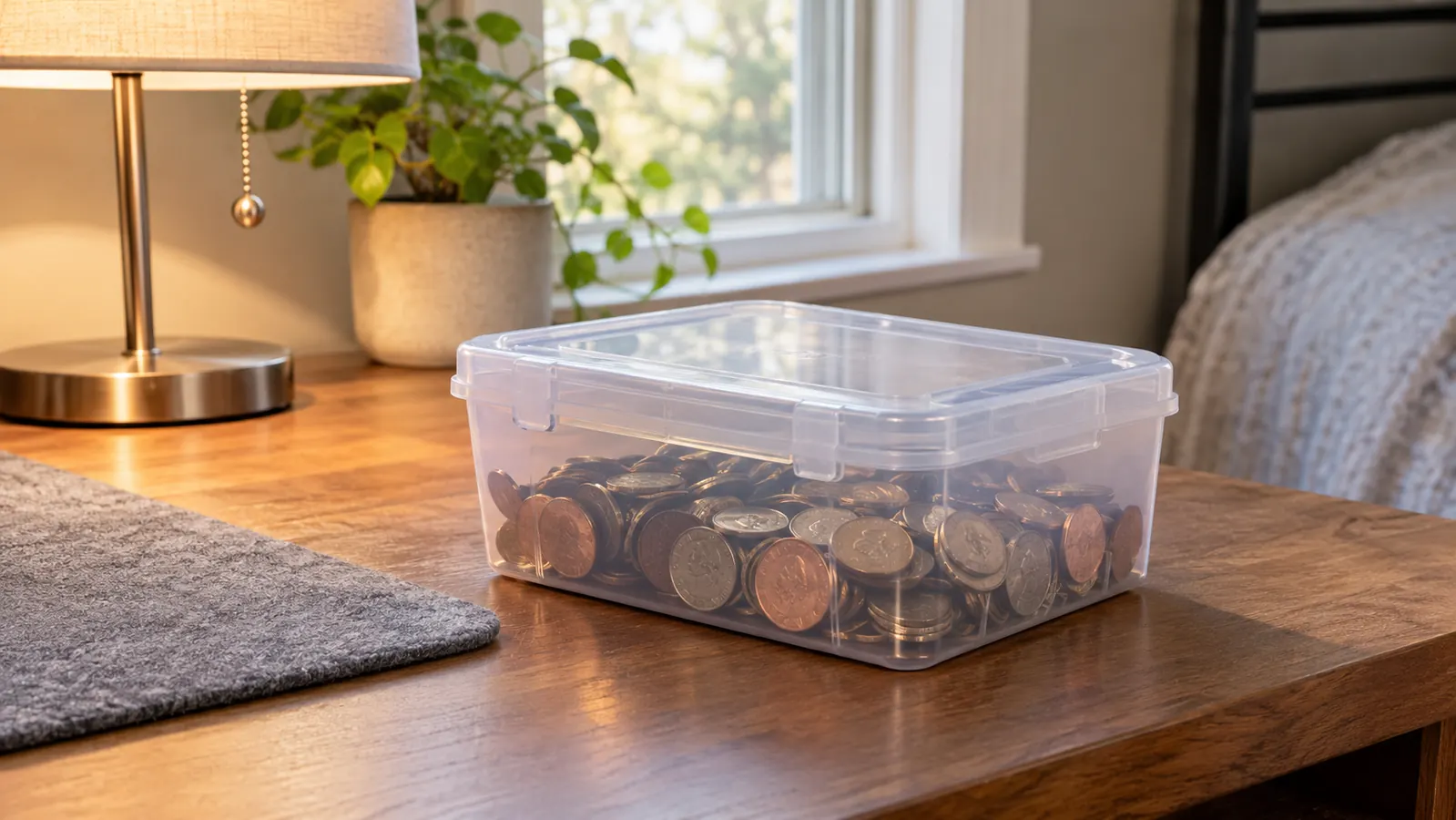
The first slab I bought was a common-date Morgan dollar, and I carried it home in my shirt pocket like it was made of eggshell. That was four years ago, after I retired from the tool room and picked the hobby back up. For a while the slabs lived in a shoebox on the closet shelf in my spare bedroom here in Dayton. Every time I wanted one, I had to move three others, and once I fumbled a slab onto the carpet. No harm done, but I did not like the sound it made. A year ago I bought the PCGS Plastic Storage Box for 20 Slab Coin Holders. I have used it every week since.
I am not a dealer. I am a retired machinist. My grandfather left me a coffee can of wheat cents when I was 11, and I still collect Lincoln wheat cents and a modest run of Morgan silver dollars. My granddaughter Maddie, who is 9, comes over on weekends and I am teaching her how to hold a coin by the edge and how to put it back where it belongs. That last part is why I bought the box. A child learning the hobby should not have to dig through a shoebox any more than I should. I belong to a local coin club that meets once a month, and the box goes with me when I take something to show.
The Quick Verdict
A plain, stackable plastic box that holds 20 slabs, closes with a snap, and does exactly what a storage box should. It is not water resistant and it is not a display case, but it ended the shoebox problem for good.
Amazon Check Today's Price →Twenty slabs in one place, not a shoebox pile
The PCGS box holds 20 slab holders, measures 9 by 3.5 by 2.75 inches and weighs 16 ounces empty. It stacks on a shelf and snaps shut without assembly.
Amazon Check Today's Price on Amazon →How I've Used It
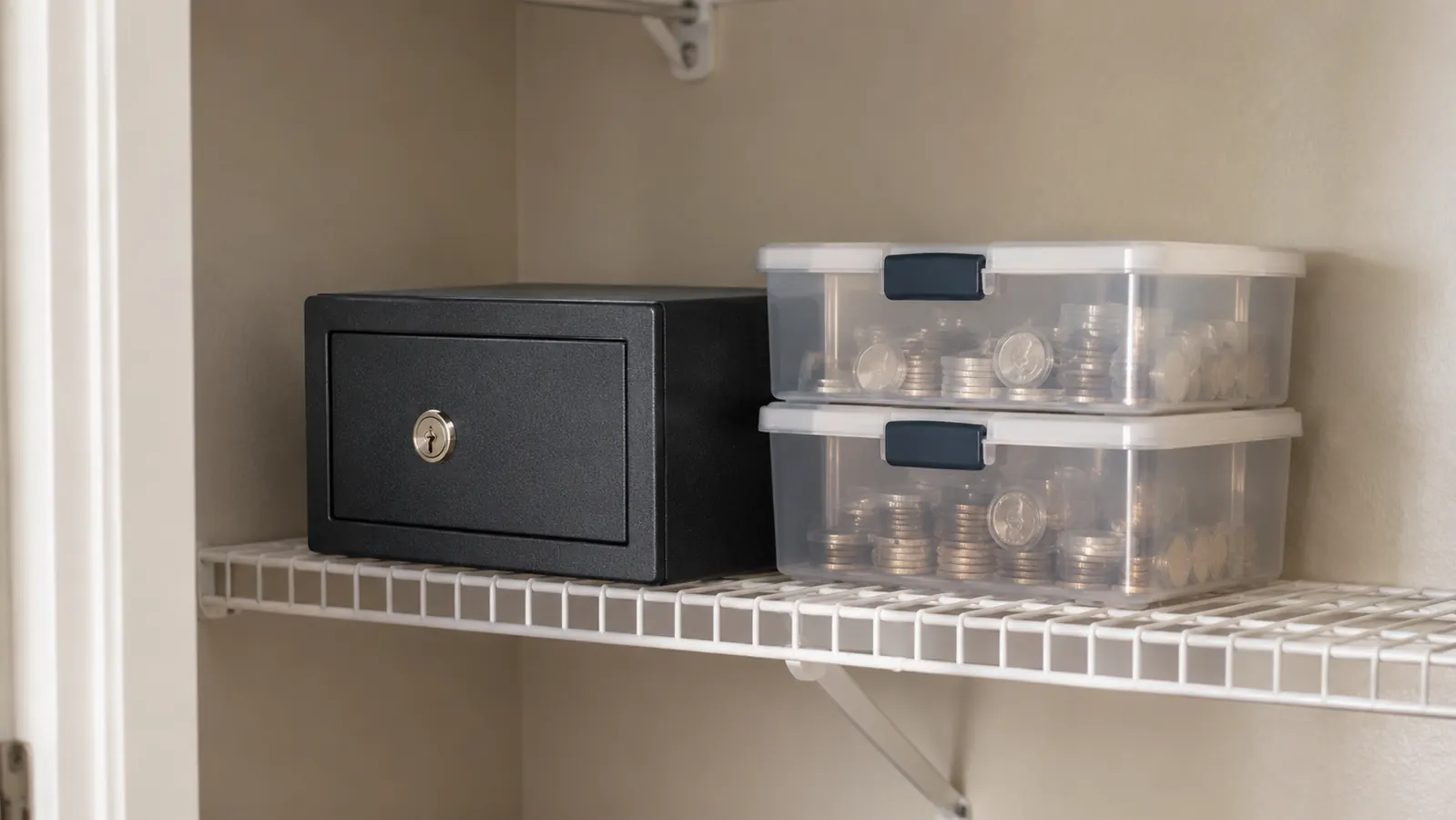
I keep the box on the middle shelf of the closet in my spare bedroom, next to a small fireproof box that holds a few things I do not want to lose. The closet is dry and away from the floor. The PCGS box is 9 inches long, 3.5 inches wide and 2.75 inches high, so it does not crowd the shelf. It weighs 16 ounces empty, which means I can pull it down with one hand and set it on the desk without clearing a space first. The desk has a lamp and a felt pad on it. That is where I do my looking. Carol does not collect, but she knows not to set a laundry basket on that shelf.
I measured that shelf before I ordered, the way I would measure a piece of stock before cutting it. It is 12 inches deep and 30 inches wide. Two of these boxes side by side take 18 inches of the width, which leaves room for the fireproof box and a couple of inches of air on either end. If your shelf is shallow, check it first. A box 9 inches long hanging over the front edge of a 7 inch shelf is a box waiting to fall on a hard floor, and no storage box is worth that.
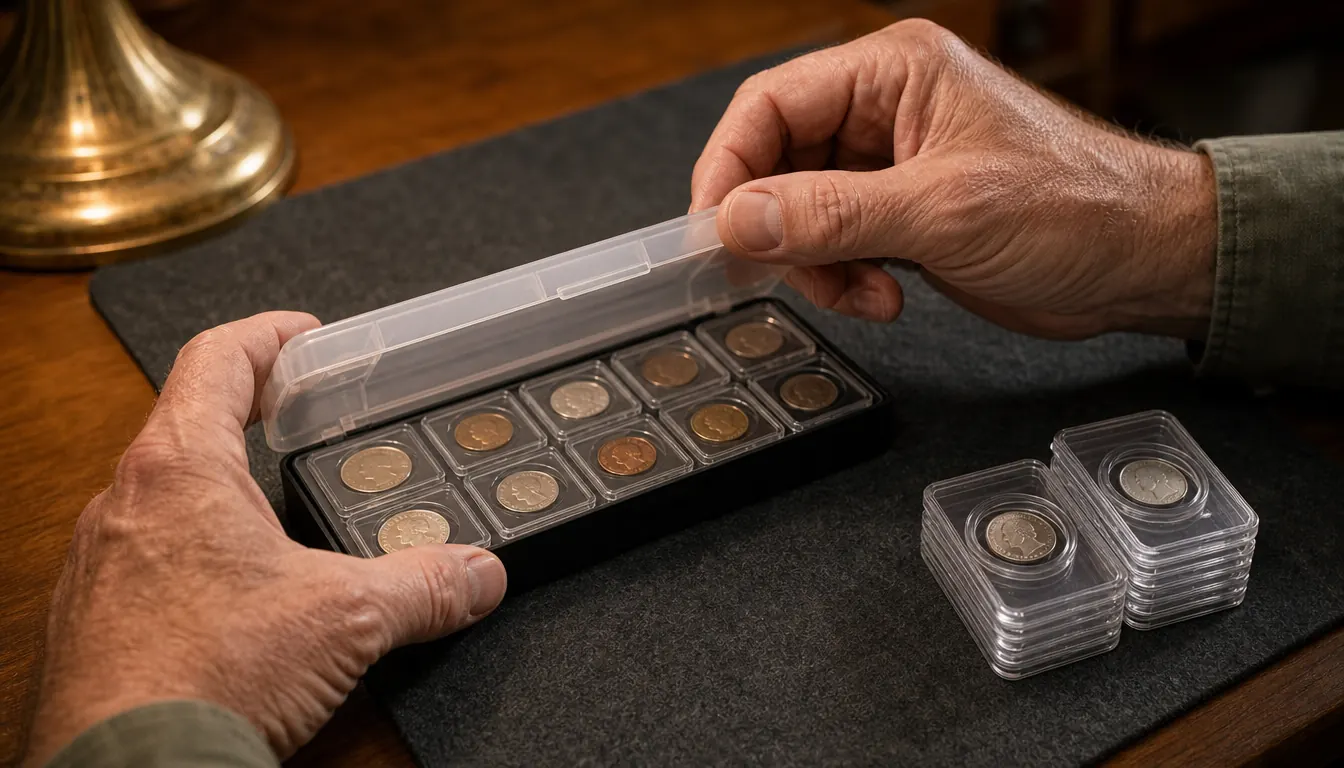
The box holds 20 slab holders. I keep my Morgan dollars in one run and the wheat cents I have slabbed in another. The lid closes with a snap. I open it, take out the slab I want, and press the lid down until it snaps. That is the whole routine. No assembly. No trays to line up. I have had it for a year and the snap still feels like it did on the first day. The plastic has a few light scuffs on the corners from being set down on the desk, but nothing has cracked.
Maddie knows the routine now. She asks for the box, I set it on the felt pad, and she opens it with both hands. I showed her how to lift one slab by the edges and not by the face. The box has enough room that she does not have to pry at a tight stack. She can see the labels when I fan them out on the pad. Then they go back in, and the lid snaps. For a 9 year old, that is a lot of ceremony, but ceremony is how habits start.
What the Box Actually Is
Strip away the name and it is a plastic box made for slab holders. The listing says 20 slab capacity, a snap closure, stackable, and no assembly required. The dimensions are 9 by 3.5 by 2.75 inches. The weight is 16 ounces. It is not water resistant. That last point matters more than the first three, and I will get to it. It is not a safe. It is a box.
I ran a straightedge along the lid seam the first week, out of habit from the tool room, and the gap was even all the way around. I am not going to pretend that means it seals. It means the mold is decent and the lid is not warped. A warped lid is the first sign a cheap box will start catching on one corner every time you close it, and once a lid catches, you start leaving it half shut. This one has not done that in a year of weekly opening and closing.
I have bought plastic boxes before that were sold for one job and did another. This one does the job it says. The slabs go in together, the lid closes, and the box sits flat on a shelf. It is not a presentation case. You will not set it on the coffee table and admire the coins through a window. It is a storage box, and storage is what I needed.
The stackable feature is not marketing fluff. I have two of these boxes now, one for the Morgans and one for the slabbed wheat cents, and the second sits on top of the first without wobbling. If you have a shelf with a few boxes, that matters. If you have one box, it does not matter at all. I did not buy the second one because I wanted a stack. I bought it because the first one filled up.
A Year of Use
The first month was mostly about undoing a bad habit. I had been keeping slabs in a shoebox with a few silica packets thrown in. The packets were old and I have no idea if they were doing anything. The PCGS box did not solve humidity. It solved order. I put the slabs in, closed the lid, and put the box on the shelf. The next time I wanted a coin, I did not have to move four others to get to it. That sounds small. It is not small when you are handling plastic slabs over a hard floor.
By the third month, I had a system. Morgans in one box, wheat cents in the other, and the slab I was looking at that week on top of the felt pad. The box came down, the lid snapped open, and I had what I needed. I did not time myself, but the difference between the box and the shoebox was the difference between a drawer that closes and a drawer that has to be kicked. I also stopped leaving slabs out on the desk. The box made putting them away easier than leaving them out.
One Saturday in March, Maddie and I went through the whole box slab by slab. She read the labels off to me and I told her what each date meant and why the mint mark sits where it sits. It took most of an afternoon. When we finished, everything went back in the box in the same order we had pulled it out, and the lid snapped. With the shoebox, that afternoon would have ended with slabs stacked on the desk for a week, because putting them back was more work than leaving them.
At the one year mark, the box looks like a box that has been opened and closed a lot. The plastic has a few light scuffs on the corners. The snap still catches. The lid still sits flat. I have not dropped it, but I have set it down harder than I should a few times. Nothing cracked. I cannot tell you it will last 20 years. I can tell you it has lasted one year of weekly use without a problem. For a plastic box, that is a fair trade.
The Humidity Question
I want to be plain about this because it is the one thing I would want to know. The box is not water resistant. It is not a sealed container. If you put it in a damp basement, the coins inside will live in the same damp air as everything else. A snap lid is not a gasket. If you are fighting humidity, this box is not the tool. You need a dry room, a dehumidifier, or a safe with a controlled environment, and you need to check your coins. The box just holds them.
I checked it after a wet week in April, the kind we get here where the windows fog by evening and the basement smells like a basement. I carried the box up to the desk, opened the lid, and the slabs were dry to the touch. That is not proof of anything, because the room was dry. But it told me the box is not trapping anything, which is the other way a closed container can go wrong. A box that holds moisture in is worse than no box at all.
What the box does do is keep the slabs together in one place. That is not nothing. Before, a slab could slide off the shelf when I reached for another. A slab that lands on the floor can crack at the corner. I have not had that problem since I started using the box. The slabs go in and come out one at a time. The box also keeps them out of the way, which is most of what I wanted.
I keep a small hygrometer in the closet, not in the box. It reads the room. That is the only reading that matters. The box does not claim to control anything, and I would not trust a plastic box that did. If you want a sealed environment, buy a sealed container and learn how to use it. If you want a place for 20 slabs, this is that place. Those are two different jobs. I wish more listings said so.
What I Would Change
The box is not perfect. It is not water resistant, so it cannot go in a garage or a basement that smells like a basement. It is not a display case, so if you like to look at your coins without opening a lid, you will not like it. And the snap lid is secure enough for a shelf, but it is not a lock. If a child can reach it, a child can open it. That is true of most plastic boxes. It is worth saying out loud.
I would also like a label on the end. I have two boxes and I had to put a piece of masking tape on each one to tell them apart. That is a small thing. A strip of tape solved it. But a recessed label area would be better. That is the only change I would ask for after a year. I am not asking for a gasket or a lock. Those would make it a different product and I would rather keep this one simple.
Who This Is For
This is for the collector who has slabs and no system. If your graded coins live in a shoebox, a drawer, or a stack on a shelf, the PCGS box will give them one place to be. It is also for the person teaching someone else. Maddie can open it, take out a slab, and put it back without me worrying that she will knock over a tower of plastic. It is for the hobbyist who wants storage, not a showcase.
It is also for the collector who has outgrown a single box. The boxes stack, so two or three can live on the same shelf without turning into a pile. I have two. I can see a third in my future if I keep slabbed wheat cents in the same way. The box is plain. That is a compliment. It does its job and does not ask for attention.
Who Should Skip It
Skip it if you are fighting humidity. The box is not water resistant, and no plastic box with a snap lid is going to save a coin from a damp room. Skip it if you want to display your coins. This is a storage box. You will be opening it every time you want to see a label. Skip it if you need a lock. The snap keeps the lid closed. It does not keep a person out.
Skip it if you have only a few raw coins and no slabs. The box is made for slab holders. A raw coin in a flip does not need a 20 slab box, and you would be buying capacity you do not use. I am not going to tell you it is a bad box because it is the wrong box for that job. It is just the wrong box for that job. If you are not sure, count your slabs first. If the number is under five, wait.
What I Liked
- Holds 20 slab holders in one place
- Measures 9 by 3.5 by 2.75 inches and weighs 16 ounces empty
- Snap closure is simple to open and close
- Stackable, so two boxes sit on a shelf without wobbling
- No assembly required
Where It Falls Short
- Not water resistant, so it is not for damp rooms
- Not a display case, labels are hidden when the lid is closed
- Snap lid is not a lock
- No label area on the end
- Plastic can pick up light scuffs with weekly use
A box that measures 9 by 3.5 by 2.75 inches holds 20 slabs, stacks on a closet shelf, and snaps shut. That is all I needed it to do.
If your slabs are still in a shoebox, this is the fix
The PCGS box holds 20 slab holders, stacks flat, and closes with a snap. No assembly, no trays, no drama.
Amazon Check Today's Price on Amazon →